Our activities for the Commemoration of the GenoCost in the Democratic Republic of Congo
-
by
cojeski
- No Comments on Our activities for the Commemoration of the GenoCost in the Democratic Republic of Congo
Report of our two weeks public awareness campaign about the GenoCost in the Democratic Republic of Congo
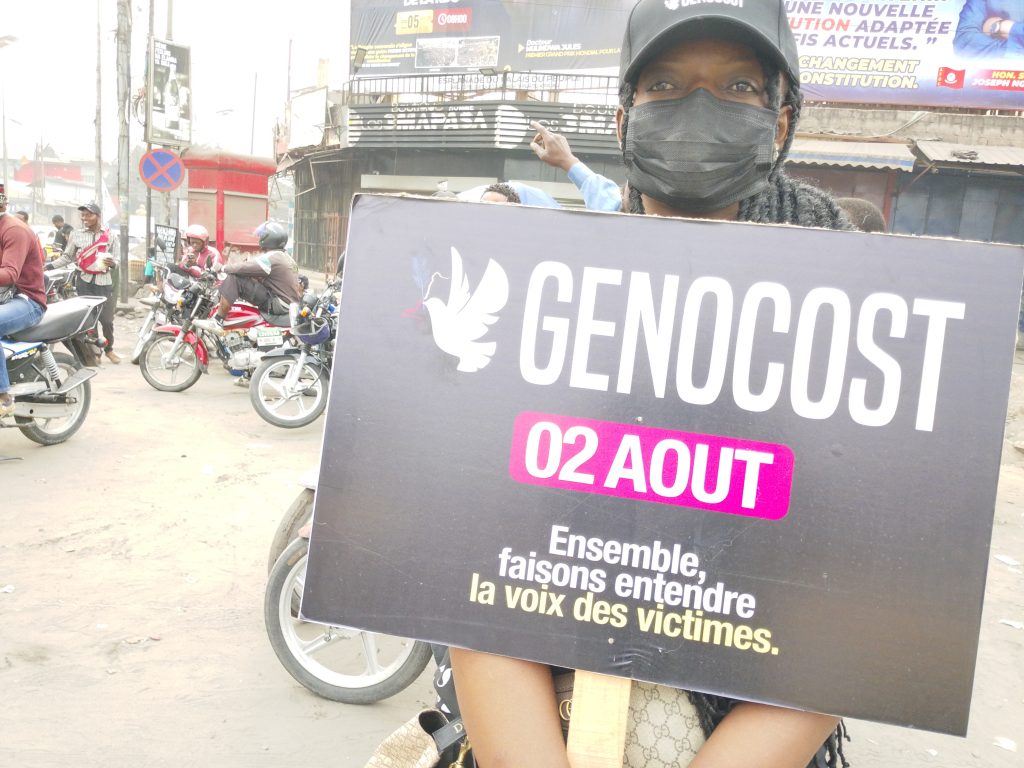
One on the posters on the streets on Kinshasa during a public campaign to create awareness among people in the city
Background Information
Since 1996 when the very first Rwandan Troops entered into the Democratic Republic of Congo up to now more than 10million people have been massacred by Rwandan Army and their allies on DRC territory, these include both Congolese and Rwandan Hutu Refugees in DRC. Many entire villages were wiped away from their populations, generally in Eastern DRC in both North Kivu and South Kivu Provinces which are the most affected by Rwandan Army influence.
Among the victims recorded include Local Traditional Leaders who were massacred in order to place their own and falsify the history, we also have prominent church leaders who were replaced by those who can compromise with Rwanda, Human Rights Defenders, Actors of the Civil Society, Political Actors and other influential people in the society. People were massacred in their villages and replaced by people from Rwanda in order to claim land, interesting most of the sites of massacres are located in areas which are rich in minerals and which have fertile land. Generally military operations targeted civilians in order to either eliminate them of push them far from these mineral places which are being exploited up to now.
In 1996 up to 1998: Most of the massacres in DRC targeted Rwandan Hutu Refugees, their camps where burnt, others were told to come for relief aid and once they gathered they were all brutally killed, others were told to come and be repatriated back to Rwanda but they were killed while others were massacred in their hideout and on their way to seek safety.
1998 up to now, most of the massacres have been committed against Congolese people in various places just because they are living in villages which have minerals.
The creation of the GenoCost
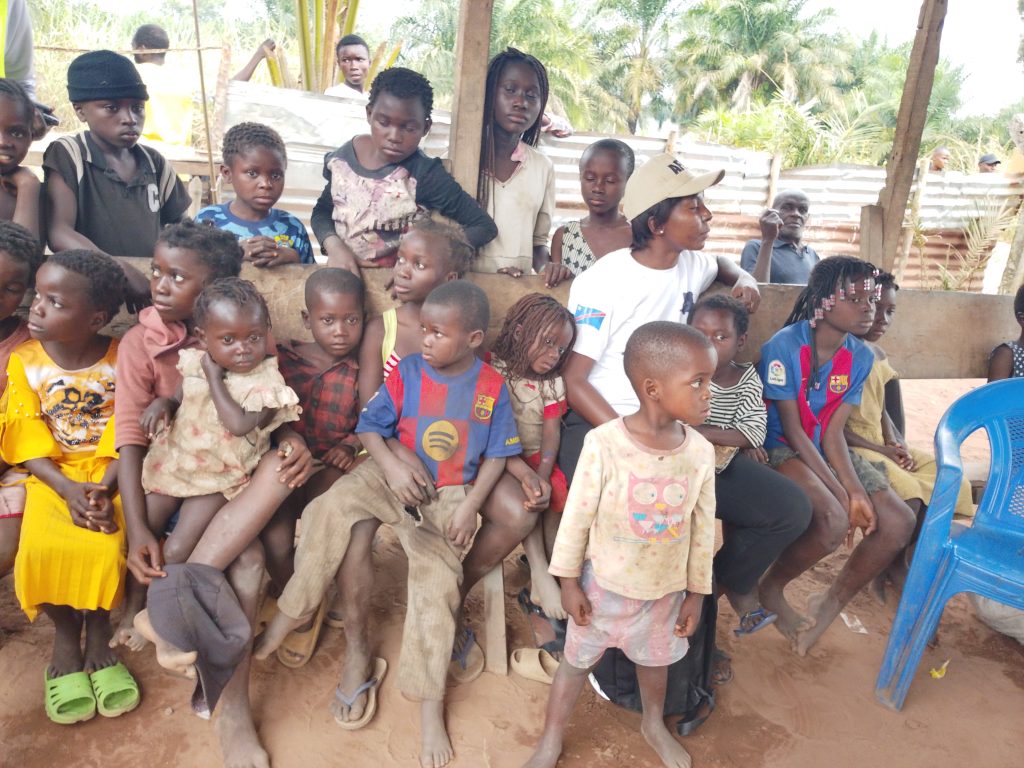
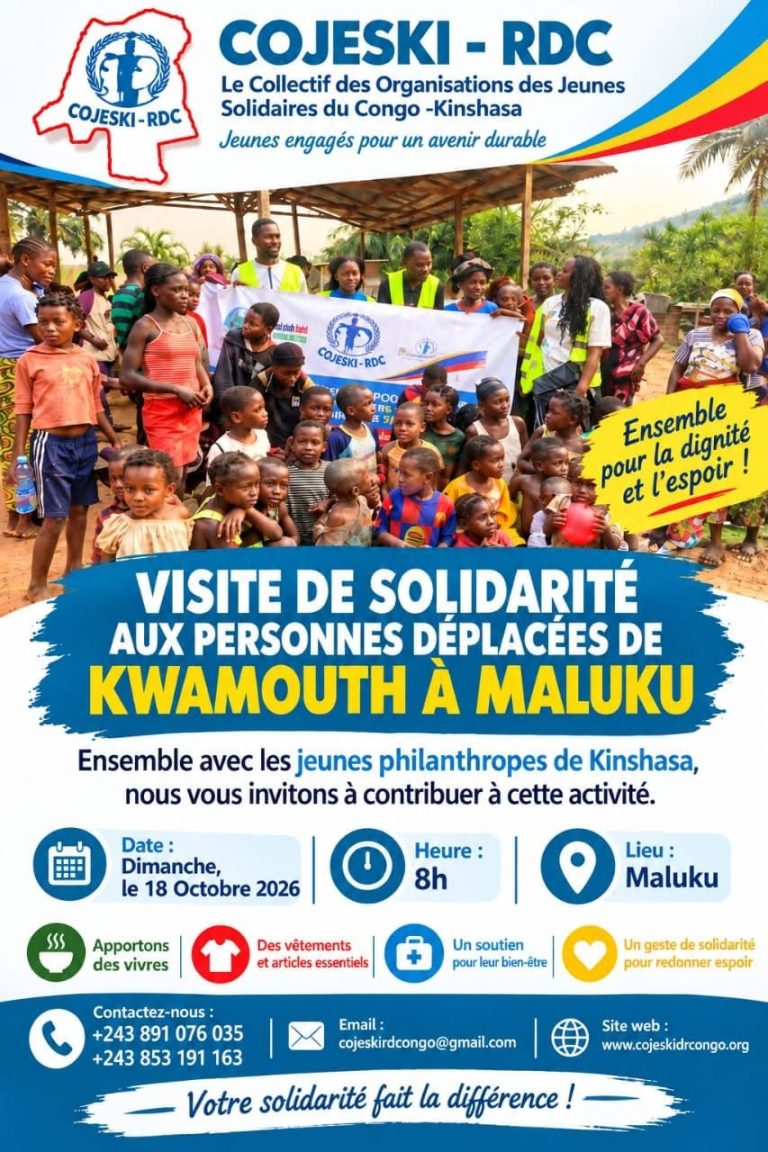
During our field visit to the victims of war in Maluku. These children are here abandoned and much as we can noise about the GenoCost, we should be able to respond to their basic needs first.
It was on this background that activists from Congolese Civil Society and Diaspora in England came with the idea of the GenoCost in 2013 and later DRC passed a Law of the GenoCost in 2022.
The term Genocost may be unfamiliar to many people outside Central Africa. Yet in the DRC, it has become an increasingly powerful symbol of “collective memory” and a rallying cry for justice. Combining the words “genocide” and “cost”, it seeks to draw attention to the human suffering associated with decades of armed conflicts, while highlighting the role played by the exploitation of natural resources in sustaining violence.
Why August 2 matters
The choice of August 2 is not accidental. It marks the day the Second Congo War broke out in 1998 under a rebel group called Congolese Rally for Democracy known as RDC-Goma backed by Rwanda. Often described as “Africa’s world war”, it transformed a regional crisis into one of the deadliest conflicts of modern times.
The edge you’ve been looking for. Receive daily expert analysis. Although estimates vary, more than 10 millions of people are believed to have died as a direct or indirect consequence of the conflicts that have affected the DRC since the mid-1996. These deaths resulted not only from direct violence, but also from disease, hunger and the collapse of essential services, often following displacement.
In recent years, Congolese authorities, building on civil society initiatives, have turned the anniversary into a broader day of remembrance for victims of conflict-related violence. The commemoration reflects a growing determination to preserve collective memory and secure greater recognition of the suffering endured by Congolese communities, to restore peace, justice and restore the lives of the victims.
Our activities during a whole month since July 2026
As organization, this is the second time we have organized events seeking at awareness about the GenoCost aiming at advocating for the inclusion of refugees in the national commemorations which are being done and in the recognition of sites where refugees were massacred including the urgent need to preserve those sites.
Meetings: We held various meetings which included
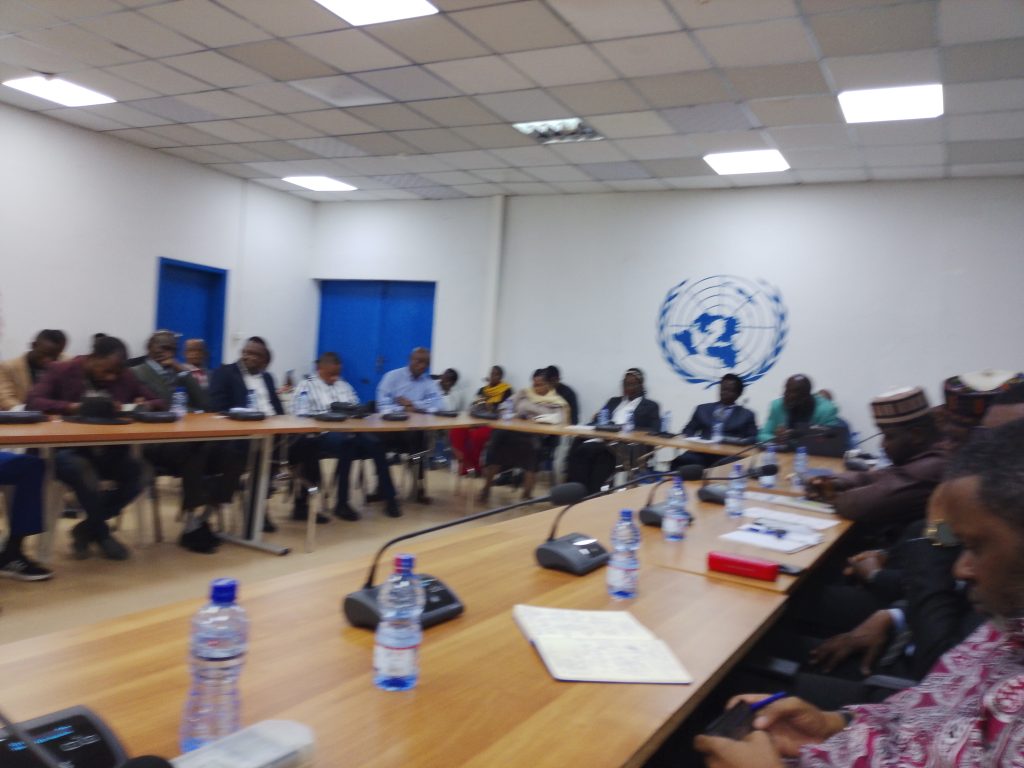
Stakeholders engagement on issues around Transitional Justice which is one among the key pillars of the GenoCost
Two (2) meetings with refugee leaders living in Kinshasa where they shared their sentiment and frustrations of not being recognized in various national efforts. This Rwandan refugee Leader in Kinshasa said “we were the very first target and we still remain the target of Rwanda, but we do not understand why we are not considered in these activities about the victims. For Rwanda Government any Hutu Refugee in DRC both women, children, young people elderly, men and women all genocidaires and members of FDLR that is why we are still hiding even here in Kinshasa because Rwanda has spies in many Government institutions, Humanitarian Actors and UN Agencies”.
This other one said “truly speaking, I do not know how I survived, and sometimes I wonder what happened that I’m still alive. On that day, we were too tired in Tingitingi then Rwandan Army sent spies to inform us to get organized and cross the river in order to collect food and other urgent relief aid, we all lined up and as a long chain of people entered the bridge of Lubutu River, Rwandan Army opened bullets to people and thousands of civilians died others jumped the bridge and fell into the river where they died. I was down on the Bridge among dead bodies, so soldiers believed I was also dead, when they left I stood up and crossed the River and moved a different direction”.
Visiting some Institutions in Kinshasa
In order to exchange with some stakeholders we visited the Episcopal Conference of DRC, they told us to write an official letter which we did but they never called, we visited the Office of the African Union in DRC, they also told us to write a letter which we need but they never called us up to now. We also visited the Office of FONAREV which a DRC Fund for the Reparation of the Victims, they also told us to write but up to now we have not yet received a reply.
One week of social media public Campaign
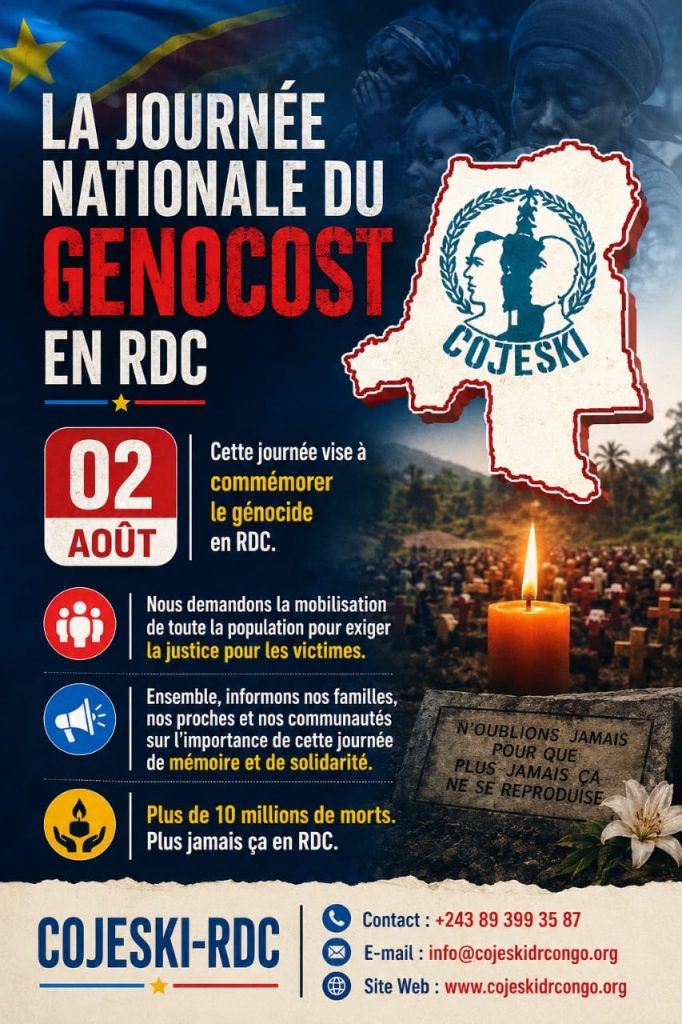
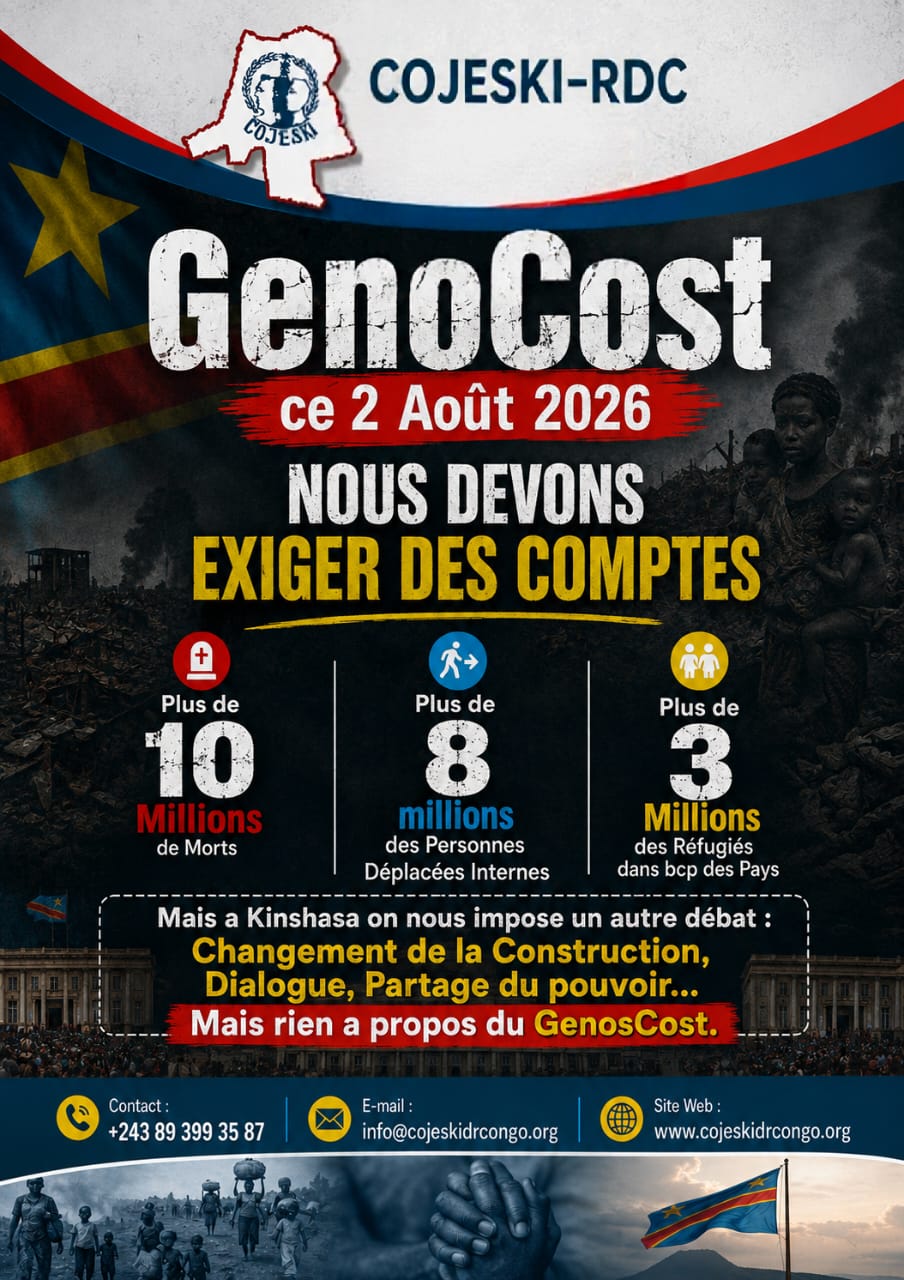
This is one among our various posters we circulated in social media, this one called upon all people to get involved in the preparations and take part. Each person can do something either in association with others or him/herself.
We developed posters with key messages focusing on issues around the victims, the sites, the recognition, peace and security and the popular support to the GenoCost. Our posters where shared in 139 WhatsApp Groups where we believe it touched directly more than 50,000 people, some people also shared them in their profiles, and others were posted on Facebook generally on our 9 Facebook accounts, we estimate that in total 14,000 people were informed through these posts on Facebook.
Attending Sunday 2nd Music Festival organized by FONAREV in Kinshasa
We also attended the FONAREV Music Concert organized at ECHANGER Public Place in Kinshasa and had engagement with organizers.
Observations
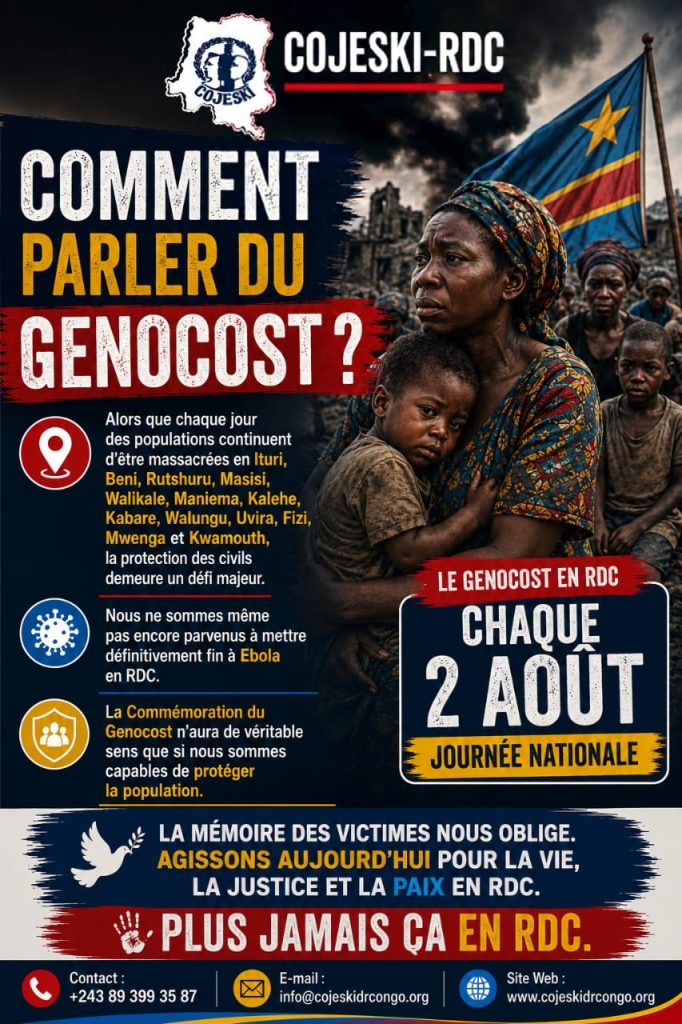
This posters engaged the pubic to remember all those in areas which are the control of armed groups backed by Rwanda and who should be liberated first.
The National Commemoration of the GenoCost focused on the International recognition of the GenoCost in DRC which we believe is so good but should not have been the priority. As we pointed out in our flayers in social media, efforts should be put on ensuring the security and protection of the civilians who continue facing atrocities from Armed Groups backed by Rwanda, we also advocated for the inclusion of refugees in the GenoCost. On this point we are glad to observe that FONAREV the main organizer clearly mentioned about civilians massacred in 1996 in Goma but did not clearly say about refugees, however the Media and Press stressed clearly massacres against Rwandan Hutus Refugees in DRC, which we believe is so far a positive move on which we should focus on in the future.
Events were not so much inclusive because most of Associations of Victims in DRC were not directly involved and FONAREV deliberately put them aside.
Recommendations
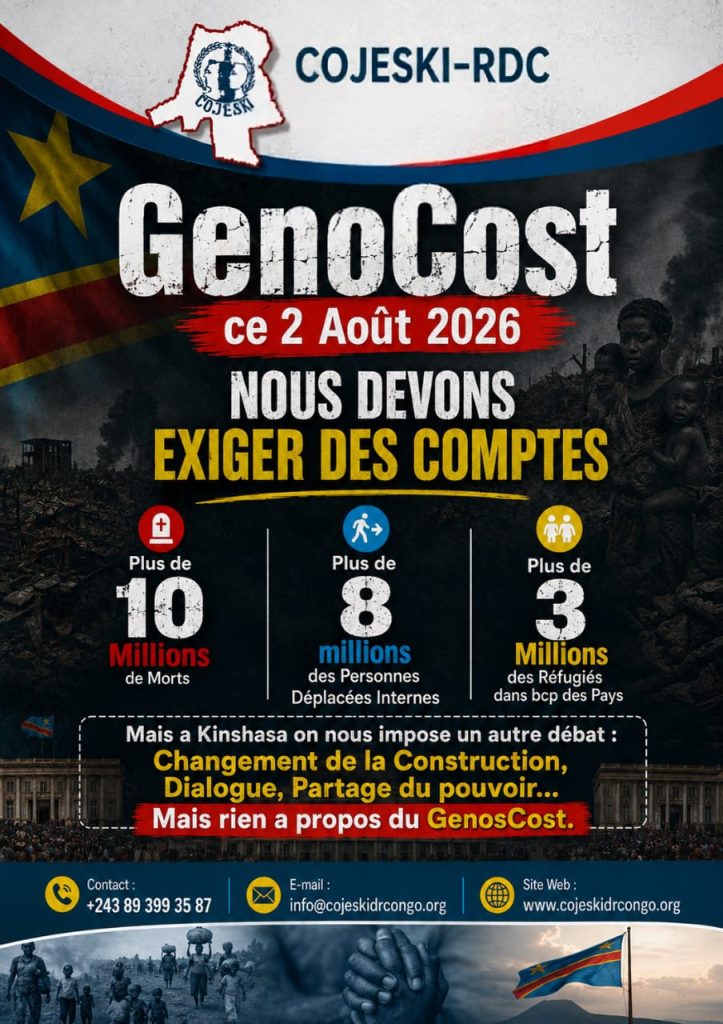
This Poster was showing the public the statistics of the affected people and the need to restore their lives
We repeat the same recommendations which have been formulated by the United Nations to the DRC Government to remove all those suspected of crimes against humanity in all national institutions,
To ensure the security and the protection of civilians, the true commemoration of GenoCost should reflect efforts towards security of the victims,
Financial support to grassroots organizations and Associations of the Victims so that they can front forward their priorities and ideas rather than seeing other people defining issues for them,
Identify and protect sites of massacres against Rwandan Hutu Refugees in DRC which remain highly ignored in the country,
Create community awareness in DRC so that local population can own the struggle for the justice,