
Report on our one day workshop on the problematic of FDR Armed Group in the Democratic Republic of Congo
-
by
cojeski
- No Comments on Report on our one day workshop on the problematic of FDR Armed Group in the Democratic Republic of Congo
Report on our activity of one Day of exchange of the on the problematic of the Democratic Forces for the Liberation of Rwanda known as FDLR in DRCongo

Great moment among the Panelists even if they did not agree but still they had to smile and enjoy jokes among themselves during the discussions.
Introduction
Our Peace and Conflict Resolution Thematic Group is active on various issues which threaten peace and security in the Democratic Republic of Congo in order to contribute to peace, pacific cohabitation and conflicts resolutions among communities and states, but also proving stakeholders with accurate information in order to make informed decisions, to combat fake-news and stigmatization. It is on this background that we are also focusing on the situation of the Democratic Forces for the Liberation of Rwanda known as FDLR operating in the Eastern Democratic Republic of Congo. The world “problematic of FDLR” on our invitation does not reflect our conviction but to fit into the public perception and actors which refer to FDLR as “problem”.
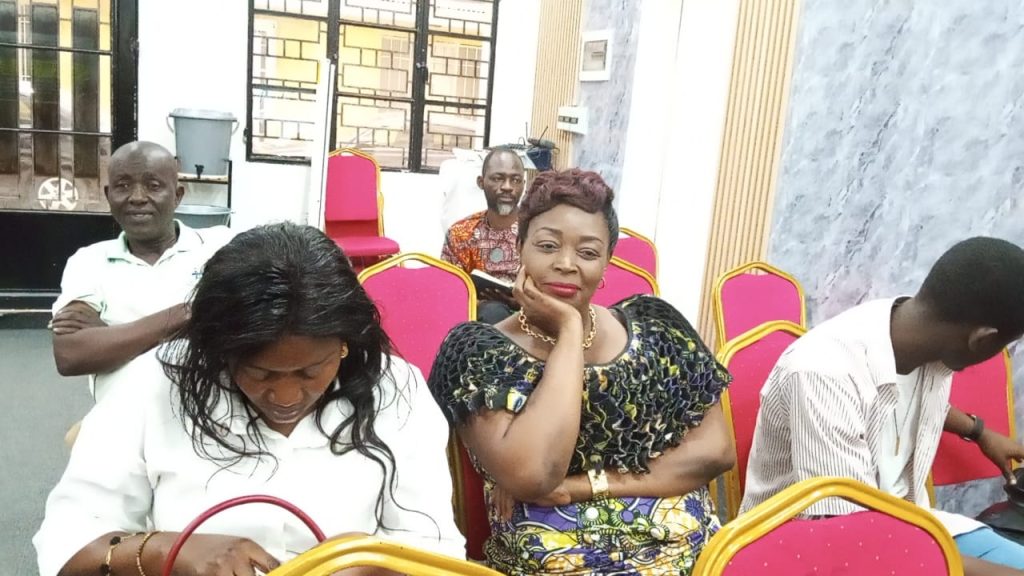
Some among the Rwandan Refugee Community Leaders who attended the workshop, some are wondering what participants are saying they totally ignorant.
One day of reflexion on the situation of FDLR in DRC
On Thursday August 20th, 2026 we held our second public conversation of issues surrounding the FDLR in DRC. The meeting started at 9:45 at the Conference Hall of the National Commission for Human Rights known as “CNDH” in Kinshasa and ended at 1:07 pm, more than 50 persons were invited to attend from the Civil Society, local organizations, Diplomatic Missions, United Nations Agencies, Government Institutions, Rwandan Refugees and the Media who we believe at the main actors in this issue.
The theme was “questioning what we known about FDLR to promote accurate information for better decisions”.
General objective
To contribute to improving knowledge on the FDLR problematic and definitive and lasting solutions on Congolese soil and the protection of refugees in the Democratic Republic of Congo
Specific objectives
Sharing credible information about the FDLR and Rwandan refugees in DRC,
Presenting on the negative and positive consequences of the FDLR situation and the protection of refugees,
Strengthen the prevention and denunciation of existing practices that negatively affect the debate on the refugee situation in the DRC,
Combating disinformation and discouraging all forms of criminalization surrounding the refugee situation in the DRC,
Breaking down the myths and stereotypes that underlie many violations of refugee rights in the DRC,
To formulate recommendations and actions to be taken at the local, provincial and national levels for a lasting and definitive solution to the FDLR problem.
EXPECTED RESULTS
The participants generally have a better grasp of all the information concerning the FDLR and Rwandan refugees in the DRC,
Actors at each level are well-informed about sustainable solutions to be learned at each level to resolve the FDLR and Rwandan refugee problem,
A local lobbying group to advocate for internal Congolese solutions is formed,
The participants agreed on strengthening actions related to prevention, collaboration, sharing of alerts, and denunciation of violations of refugees’ rights in the DRC,
The implementation of strategies to combat disinformation and the establishment of effective communication on the situation of refugees in the DRC,
Participants commit to discouraging and eliminating myths and stereotypes about the situation of FDLR and refugees in the DRC,
The formulation of more sustainable internal recommendations to resolve the problem of FDLR in the DRC,
Participants
Basing on the list of the presence 26 persons attended the workshop and include: Two government institutions mainly the National Police, and the Disarmament Program were represented, four Media Groups, Rwandan Refugee Leaders, and actors from the Civil Society and local organizations.
Panelists
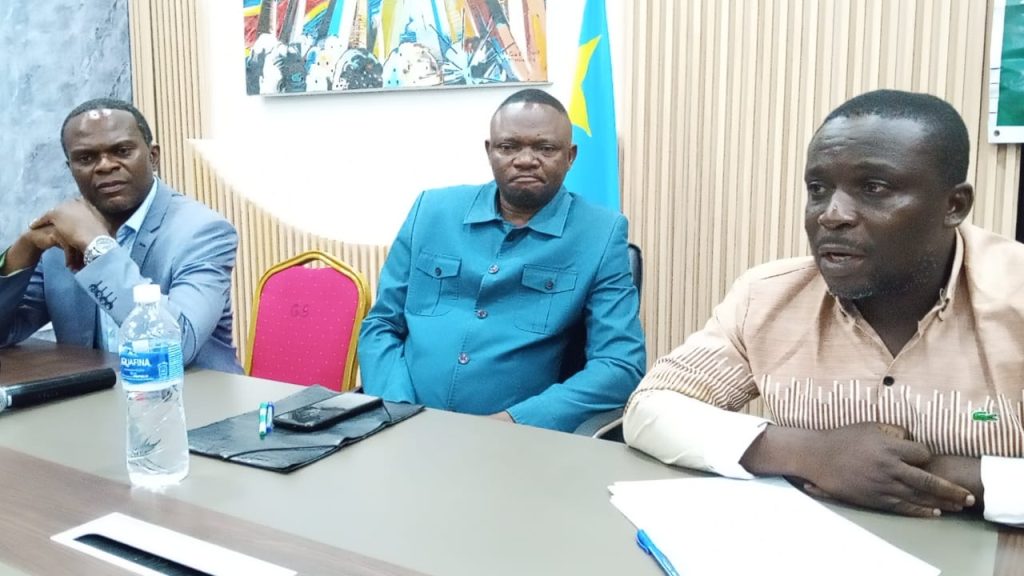
Here are the three Panelist, Dr Dady Saleh at the left, Lawyer Luc Kalala in the middle and Kulihoshi M Pecos at the right
We invited three Panelist and two among them came who included a representative from the Network of Civil Society Organization for Transitional Justice who presented on the definition, rights and duties of refugees, the National Coordinator of Wazalendo who presented on issues about Wazalendo if they included FDLR, and then the National Team Leader of COJESKI who engaged on the general information about FDLR and reacted on what people say about FDLR. However the Minister of Regional Integration did not come to the event and did not even send a representative despite the assurance we received that he should come.
First Presentation by Kulihoshi Musikami Pecos, specialist of refugee rights in the Great Lakes Region.

Pecos started from the basic historic notions where he indicated that in 1994 Rwandan Refugees fled to DRC in three categories which included “Civilians, local militia called Interahamwe and Ex FAR which was the former Rwandan Army”. Pecos noted those with guns were not disarmed right from the border as it is required, transit camps were created at less than 20 Km from the border with Rwanda and these camps remained for over two years, yet these camps could have been set up for less than two months, still in these camps those with guns were not disarmed until 1996 when Rwanda’s Army attacked these camps. The responsibility lies into the hands of the Democratic Republic of Government which did not take the necessary measures.
Here is the very first issues of violating existing laws and all those involved should respond and account for what happened. In 1998 the DRC President Laurent Kabila mobilized both Interahamwe and Ex-FAR to help him in the war against Rwanda, some are believed to have integrated the Congolese National Army which is yet to be proved if they are still there, however this may not be true because over the years Rwanda highly infiltrated Congolese Army. This is also part of the culture of militarizing refugees in the Great Lakes Region by all state members generally Uganda, Rwanda, Burundi, DRC among others.
In the year 2000 both Ex-FAR and Interahamwe were encouraged to create the current FDLR in order to have a political agenda which was done. From its creation the FDLR made it clear to pursue two main objectives: The Protection of Hutu Refugees in DRC and to return to Rwanda as durable solution. This is still the struggle they are involved in up to now. But questions remains: What is the problem with these two objectives? Why should they be criminalized for this?
The FDLR are composed of Hutus refugees (85%) Ex-FAR (5%) and Interahamwe (5%), and Congolese from the host Communities (5%). The main objective of Hutus refugees in the FDLR is to fight for the protection of Rwandan refugees against Rwandan Forces which attack them regularly, these refugees have never been protected by the DRC Government and by MONUSCO. It is important to note that even up to now many Hutus refugees are protected in zones which are under the control of FDLR, and in many times influential and Community Refugee Leaders are better protected in areas under the control of FDLR than in areas that are under the control of DRC Government even up to now. So where the problem is if they can organize themselves in order to protect fellow refugees who are not protected? And why the DRC Government and the United Nations Mission are not willing to protect these refugees?
Pecos insisted, when we speak about FDLR we should be specific which faction of FDLR we are talking about so that we can get you very well and avoid confusion. We have so many factions of FDLR and some were even created by Rwanda, but we are going to mention only the three main factions: FDLR Rudi: Which is based in Nyamirima/Rutshuru with a Tutsi Rwandan leadership and which is close to Rwanda, and which easily mingled together with AFC/M23 when they attacked North Kivu, le CNRD: Based in Kalehe and composed essentially of Rwandan Hutus refugees who wish to return to Rwanda without conditions, generally most of them were taken to Rwanda since 2021, and only very few remain in Kalehe generally in Bunyakiri, and the last is FDLR Foka: Based currently in Masisi and Walikale which are under the control of the Government and remain opposed to Rwanda Government, they have refugees in areas they control and their dependents also. They are accused of committing various crimes in DRC and are perceived as the negative forces who should be neutralized.
Who is FDLR exactly?
Pecos observed that various actors perceive FDLR differently and this is one among the problems, we cannot have common solutions to the situation which we do not understand in the same way. For the International Community mainly the United Nations and the European Union “FDLR are a dangerous foreign armed group in eastern DRC that has committed crimes against humanity and which should be neutralized, for the DRC Government there is no clear definition, each government officer speaks of his or her own way depending on the information he or she has, for the Rwandan Government FDLR is composed of all those with guns, their dependents and all Hutu refugees who do not want to return back to Rwanda, but also the DRC Army and the local defense called Wazalendo, for Hutu refugees FDLR is a mindset, it is an ideology of any person who is opposed to President Paul Kagame, and for a common Congolese FDLR is an armed group from Rwanda based in DRC which wants to take over power in Rwanda.
The neutralization of FDLR
For Rwanda the only way to deal with FDLR is through Military options, and in this approach many military operations have been initiated since 1996 up today but have not fully achieved the desired objectives. In many cases civilians Rwandan refugees always become the targets of these military operations. According to the United Nations Mission in DRC, the solution is convince the FDLR to put down their guns and be repatriated back to Rwanda the main strategy used here is through the promise of money, however this approach also failed. The Democratic Republic of Congo has not yet put in place her own approach in order to solve durably the situation.
Pecos, concluded his presentation on asking the participants to reflect on the necessity “to change the debate and get engaged on the discussions about the protection of Rwandan Hutu Refugees in DRC”, to evaluate our approach towards refugee protection and to evaluate all these stakeholders involved in the whole refugee protection in DRC.
Present by Lawyer Luke Kalala

Kalala helped the participants to understand clearly and in the very simple way the definition of who a refugee is according to the 1951 Geneva and African Union Convention of 1969. Kalala also expanded more on the rights and obligations of refugees when they are in the host country. One among these obligations was to abstain from carrying or holding guns and getting involved in political activities against their host country and their country of origin. A consensus was observed that they all came as refugees, however the participants were divided on what happened after, some argued that those who got guns automatically lost the refugee status, this is exactly the narrative from the United Nations High Commissioner for Refugees in DRC which create more confusion, but other participants argued that Hutus refugees did not acquired guns rather they used their very guns they came with and which were not take, and the guns they have are not against DRC and not against Rwanda but to protect themselves when they are attacked by Rwanda. The meeting observed that it should be DRC Government to withdraw the refugee status which it has never done because even DRC Government did not grant them the refugee status up to now. But also the meeting observed that other refugees are armed against DRC but they are not so much criminalized such as the Banyamulnge, the M23 which composed by refugees and some Rwandan refugees who joined M23 in Goma.
Presentation from Dr. Dady Saleh

Saleh was requested to let us know if the Wazalendo include also FDLR because Rwanda claims that FDLR are hiding into Wazalendo.
In his presentation Saleh noted that first of all Rwanda is at war to push Hutu away in order to create enough space for Tutsi, and argued about the strategies used by President Paul to massacre Hutus in DRC and which Massacres are not yet fully recognized by the International Community. The Wazalendo are Congolese people who are fighting against Rwanda in order to defend their land and their territory and their struggle is normal legitimate and constitutional, so Wazalendo do not expect kind words from President Paul Kagame and all those who believe in him from the International Community. Sometimes they may be cases where Wazalendo work together with other armed groups in order to resist but it does not mean Wazalendo are a foreign Armed Group. Saleh elaborated more of the convictions of Wazalendo and the values they stand for, and their relationship with the local population. However there are criminals in Wazalendo which we are working on, but also indicated that Rwanda infiltrated the Wazalendo and also there are criminals who call themselves Wazalendo and commit atrocities abuse people in the name of Wazalendo, we are also working on that so that our name is not abused. We are law abiding citizens, we believe in the fully protection of citizens and we do tolerate impunity, Wazalendo means “Patriots” and we stand for that, we do not believe in impunity.
Saleh noted that once the war is over, then all Wazalendo should disarmed and some will integrate their communities, others will join the national army after a training. Saleh called upon actors to support Wazalendo in different ways and contribute to make them better instead of blaming them.
Participant’s engagement
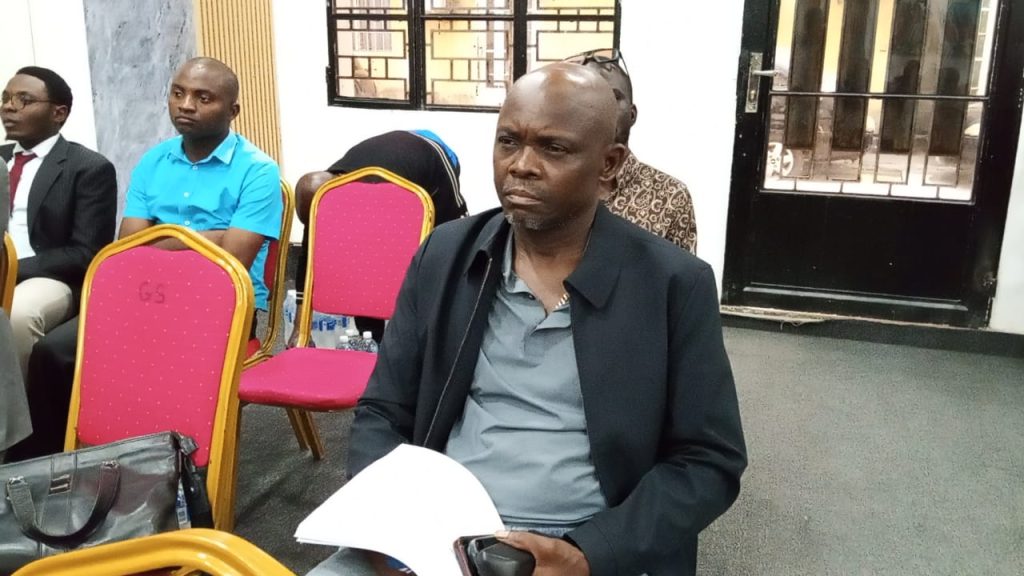
The meeting witnessed serious discussions between the representative of the Presidential Program of Disarmament who argued that for them the only response and the only solution they have in place is to disarm FDLR and deport them back to Rwanda and those who do not wish to surrender the state will use force through military operations. He argued more that opportunities where given to those who think they are refugees to put down their guns and claim for refugee status from the period of 2013 to 2015 and those who accepted the offer will not be affected. He finished by saying that all those who have guns regardless the reasons will be targeted, but he remained unclear on the protection approach put in place for Rwandan refugees, he only said those who need protection should go to UNHCR. He mentioned all the crimes FDLR have committed in DRC and said that there is nothing much they do apart from sending them away.
Reactions

Participants observed that Rwandan refugees came in DRC as refugees and up to now they have not yet lost their refugee status, many have stayed and are not yet granted the refugee status, those who entered with their guns it was not their fault and if they still have their guns it is not their fault, and therefore they should not be blamed for issues that are connected to the responsibility of the state. Participants were reminded again about the African Union Convention which prohibits carrying guns against the host country and the country of origin, and observed that in the situation of FDLR they are having guns in order to defend and protect themselves because there is no state to do so. Participants also observed that the legal status of those who have guns is not defined and the ground on which Rwandan refugees are taken to back to Rwanda by MONUSCO, are they refugees, asylum seekers, illegal migrants or people who invaded DRC territory, and more debate also focused on the dependents of those with guns and refugees who are in areas that controlled by FDLR. The participants observed the good initiative DRC Government is taking to open negotiations with FDLR but are worried it may not bring results because there are issues the government was supposed to do first such as putting in place new actors of the refugee commission which earn the trust of refugees, changing the current refugee law, and defining a national approach focusing on refugees through organizing a national Conference on this situation of refugees.

The Representative of the P-DDC-S of Disarmament during his presentation to the audience in the workshop where he explained about their work and the need to partner with stakeholders in this sector. This is a hot debate, we may not agree and that is why we need to engage often in order to build a common understanding.
Participants observed that some officers within the UNHCR and CNR are either close to Rwanda or they are perceived as Rwandans which make it difficult for refugees to go towards them. Participants encourage DRC to put in place Refugee Camps especially for Rwandan Refugees and train very well all the security services to ensure their protection, they also encouraged the government to work closely with refugee community leaders and all actors from the civil society working on this field in order improve the situation. The meeting observed that some Hutu refugees died on frontline while defending this nation and less information is told about their contributions towards the security, development and social life of DRC. FDLR and Rwandan refugees in DRC are not only a problem but they are also solutions to many things, and unfortunately there is no information accessible to the public about crimes and abuses committed against Rwandan Refugees in DRC and the perpetrators of these crimes yet the victims are there in big numbers.
Local solutions
Participants observed that the Democratic Republic of Congo has durable solutions which can satisfy all parties involved mainly DRC, Rwanda, Refugees, FDLR and the International Community.
The very first is to reform the National Commission for Refugees in order to place new office bears who will earn the trust of refugees, the second is to change the current refugee law, to put in place Rwandan Refugees camps very far from the border and deployed well trained security officers, to work closely with refugees in order to ensure a proper management of their situations and always involve them in decision making, grant all of them the refuge status and grant them humanitarian relief aid, and lastly consider durable solutions for the most in need and the victims which include naturalization, voluntary repatriation and resettlement to the third country but also engage Rwanda to open up the political space and organize an inclusive national dialogue.
Participants requested to organize more events on this issue and involve more people from the public and the host communities. However much as we are willing to promote conversation on this topic, we do not the necessary funding in order to do so.
Challenges
As you may observe the first challenge which we observed and which we expected is the absence of key actors especially the Diplomatic Missions in DRC, which highly exploit the situation of FDLR in various forums by giving controversial information which we highly question, in the same way also organizations from the Civil Society who generally are perceived as proving information to Diplomatic Missions about FDLR did not come despite the fact that we invited them, we also observed the absence of the United Nations Agencies who also claim that FDLR are a problem. Generally all these actors do not have interest that what they claim is confronted and perceived as not true, the best option is not to attend. However we shall deploy more actions in order to confront this, because we believe that Peace and Justice cannot be built on lies, but only truth can help us to achieve true peace. However the fact that they received our invitation and clearly mentioned about this topic, they knew that we are going to challenge the narrative, it is enough for us, so far they know that we are doing and do not agree about what they are saying,
The second challenge was financial which blocked us from making the preparations more attractive, and limited our capacity to advertise this activity,
The last one was the attitude as some people claimed this topic is sensitive and thought they are not so much in security in order to engage in this debate, this also included the venue for the meeting which some actors viewed as not secure enough. It is also important to note that we wanted to have this event at MONUSCO Offices in Kinshasa but they did not even respond to our request.
Conclusion
Basing on our objectives and the expected results, we are so happy and satisfied with the results “let us talk but not fight, let us accept to disagree”. The topic is highly ignored and it is not among the hot topics in the country currently, and we the organizers did not have money to provide food and transport allowances to the participants, and it was not opened to the general public.
However it had the following results
70% of the representatives of expected stakeholders came apart from the Diplomatic Missions and the United Nations Agencies who did not come, this is understandable because they are part of those who criminalize Rwandan refugees and the FDLR, yet they do not provide other possible alternatives, their narrative about FDRL and Rwandan refugees in DRC is negative and do use this narrative in order to make pressure on DRC government,
Four (4) Media Groups participated and the event was live broadcasted in one TV Station in Kinshasa, and our various interviews where broadcasted by the media which came, and as we make this report we had also feedback among our audience appreciating the debate and wanting to know more basing on what they watched on TV and what they heard on radios.
We gave a very clear and accurate information about FDLR in order to avoid confusion and manipulation, and lastly clearly proposed achievable and very simple solutions which we can also get involved in, we still believe that Rwanda should be kind to all her people outside in order to attract their support. If we protect very well all Rwandan refugees in DRC, then the FDLR will not exist anymore.
Thanks
Kulihoshi Musikami Pecos
National Team Leader


