Our two months report of the situation of Ebola outbreak in the Democratic Republic of Congo
-
by
cojeski
- No Comments on Our two months report of the situation of Ebola outbreak in the Democratic Republic of Congo
Our Report on the situation of Ebola outbreak in the Democratic Republic of Congo. Advocating for a community driven approach to end Ebola
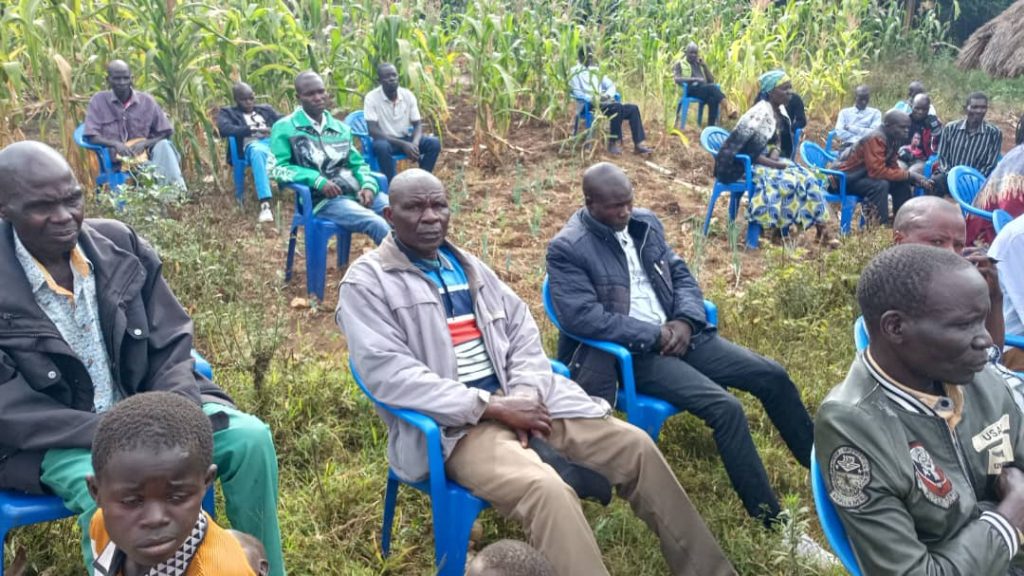
With Community Members sharing issues about Ebola in Ituri

The Community has to be involved in decisions, management and Information through a holistic approach. So far the progress of our advocacy put in place.
Our team also visited burial places in order to share information with the public on how to prevent against Ebola in Ituri, and these activities are continuing up to now,

The Collective of Youth Organizations for Solidarity (COJESKI-DRC) being a community led initiative is actively participating in the campaigns against Ebola outbreak in the Democratic Republic of Congo. As per Tshopo, Haut-Uele, Ituri, North Kivu and South Kivu are directly affected and have confirmed cases. Our community members are on the frontline doing everything they can in order to give clear and accurate information to the community. DRC is on 17th case of Ebola outbreak, and generally despite all awareness activities it is still attributed to punishment from God, to White people who want to eliminate all Congolese in order to take over their land, and to politics especially to the Government in order to stay into power.
These were the very first reactions and interpretations of the communities at the very begging and therefore pushed people to believe that Ebola did not exist. The secrecy in which Ebola victims are also treated and buried worsened the situation because people do not see and cannot confirm about Ebola.
However as time keeps on moving and people are confronted with the reality, the narrative has changed, and all now agree that Ebola does exist, questions now remain on how best can poor people in the communities fight against Ebola. We are so glad that we have strongly participated in this campaign to help people shift their perceptions through clear evidence based information and share information of the victims among them community members who are well known. This is still what we are doing, and providing people with alternative information on simple things they can do to fight Ebola at the community and this involve good Hygiene practices which existed in our cultures and norms which people have ignored. Even if there is no Soap but still before our Ancestors had coping mechanisms which we should restore back.
Activities
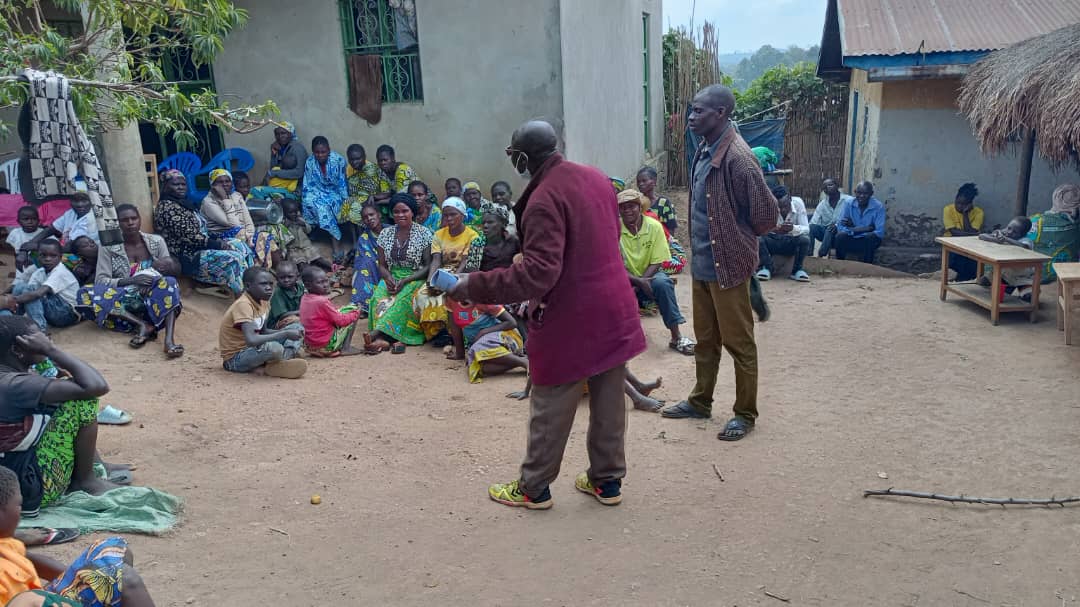
Here is how are Community Information sessions are being done in some places when it is possible to do so. Here we had Community members during interactive exchange in Ituri.
Change of perceptions from the Government
We first of all came up with an advocacy approach focusing on the Government Institutions at all levels in terms of perceptions, where when Ebola was tested the Government was proud and claimed about her vast experience to deal with Ebola over the years, showing that this one was not serious and it was just a small issue. We brought forward messages to engage the government on the uniqueness of each Ebola outbreak and of each community and each province and therefore difficult to copy and paste. This is something already done and the government changed her communication language.
Holistic approach:
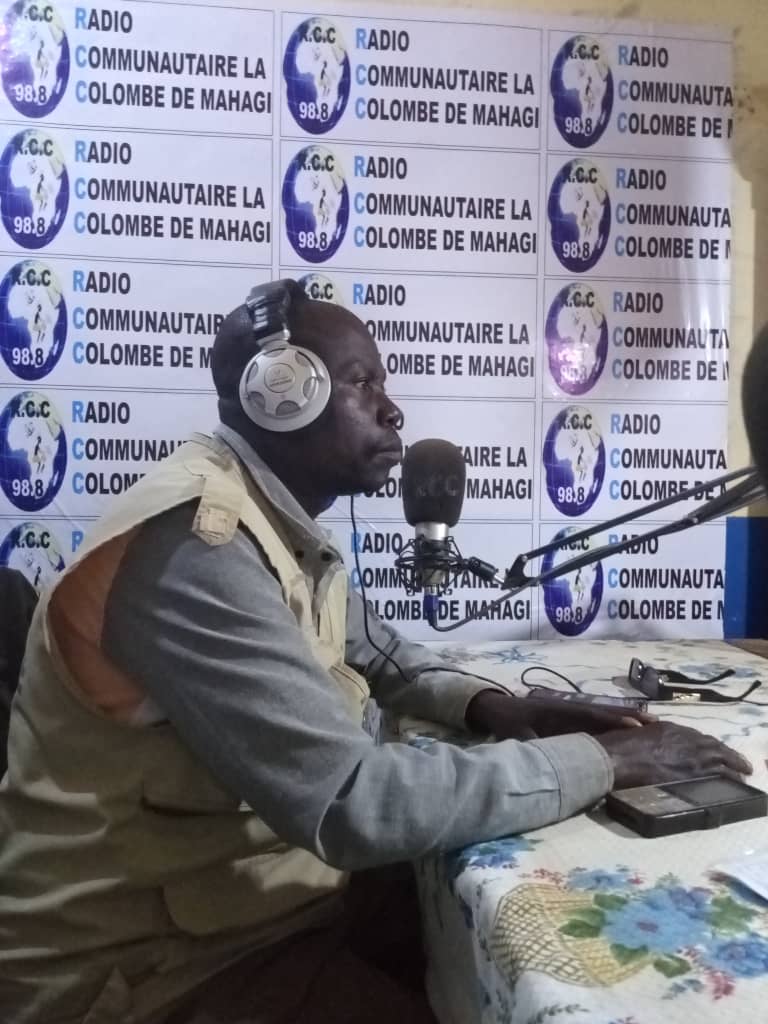
Engaging the Media, this one of our local FM Radio Talkshow, where we continue presenting on issues about Ebola in Ituri.
We talked and engaged the Government and here partners on the necessity to involve all actors in a holistic approach, and at all levels. This is also something which is being considered and now efforts should be put on the implementation where we still have to advocate for in order to be effective.
Community driven responses:
With this loud speaker, we have carried out various information campaigns in different communities and we continue doing so until the end.

While this advocacy has received the backing of all actors of the Civil Society and some few partners, not much has changed on ground. We are still observing international organizations doing everything in the field they do not know, we are still observing Government human resource coming from Kinshasa the Capital City, and on ground they are confronted with the realities mainly security, perceptions of the population and ignorance of the area as consequences more than 90% of Ebola Testing and Treatment Centers are based in Bunia town where imported human resource is comfortable to operate from. Yet we have showed clearly that at least 80% of communities have a human resource which can be involved in this fight.
Statics
The official statistics indicate about 2000 confirmed cases of Ebola in five Provinces, and about 800 deaths. However we have advocated for the harmonized statistics because this number is too low as many people are not in contact with health actors, many have not yet tested, many deaths are not tested just because there is no one to do so, and yet we have observed the high rise of deaths in various communities currently.
Reactions from the public
Here is one among interactive community information sessions, where we engage with community members and in which most of their views are taken into consideration, this was in Ituri among Muslim Communities.

We have carried out various awareness community meetings on various issues in order to spread the information among members and call upon collective protection responsibilities.
Recently in Goma City which is under the rebel occupation this woman said in our meeting “Since these rebels took over the city, the whole economy collapsed and here as you known we only survive by the grace of God, getting money is too difficult, I’m not even able to buy a Soap for use at home because it is expensive and I do not have money, I can spend a week without using a soap at home, how do you expect me to buy and use a sanitizer? Do you know how much it costs us to get water, we do travel long distances. Me I think these measures are quiet difficult for us poor people, only God will protect us”. Now the debate is on how best we can engage people to protect themselves from Ebola.
In another community meeting in Beni City, this man said “okay we get you very well, but I’m wondering if you were at my place and have to choose between dying of Ebola and dying of hunger at home, which one would you chose? Me I have opted to continue with my daily activities in order to survive and leave the rest to God, if God wants me to die of Ebola, I will die”.
The Province of Ituri is the most affected by Ebola
In some places people have been so many than expected, and we have not been able to manage the large numbers of people who want to hear from us. This is what is making the difference, especially when people have accurate information, this was one of our closed door community meeting in Ituri.

Ituri Province has been at war for long time which opposed generally two ethnic groups mainly Hema and Lendu and others who may take side according to their interests. Hema are supported by Uganda and wants to control the whole province politically, economically and socially, yet Lendu consider themselves as the natives who own the land. The province is too rich in natural resources minerals including a big forest which covesr a big part. It also became an independent province in 2015 when former provinces were divided, this makes it more vulnerable to have in place infrastructure. In some parts, roads do not exist and the only option is to walk by foot, other places people have to cross big rivers at their own risks and in some areas roads are in very bad conditions.
Some Territories are seriously affected by war and therefore they pose a serious challenge in terms of security in order to carry out community campaigns.
The Territories of Djugu and Mambasa have so far reported the highest number of Ebola cases, of the current Djudu Territory is relatively calm and this has helped our members to engage some community members on how to protect themselevs in order to promote prevention, however it is more difficult to carry activities in Mambasa Territory because of the continued violence. Security is one among the key factors which have blocked the Ebola response in these two Territories and here again people are still highly ignorant because accurate information has not yet reached everywhere.
In order to become effective, the DRC Government should prioritize security and deploy the army to restore security and stability which may help all of us to get engaged.
Community awareness does not exist in Mambasa up to now
Community members taking the lead in information sessions alongside us and actors of the Civil Society in Ituri.

While other territories have benefited from some activities aiming at fighting Ebola from our colleagues together with other actors who are involved, Mambasa has not been covered because first of all, we do not have financial support, secondly all actors are fearing to go there and lastly local actors like us are not accorded a serious attention in order to intervene.
Our members are active on ground however some have opted for a low profile due to their security, we have ways to deal with the security concerns which needs community ownership through deliberate move to empower communities in order to come up with their own solutions.
“We want to select a team of volunteers from Mambasa and bring it to Bunia for training and then deploy it back in their communities but we do not have the necessary funds”.
Activities
Trainings of community members, sharing information and facilitating the movement of repost teams, including helping them to access communities, alerting about cases, community awareness, providing security information about the movement of armed groups and negotiating with armed groups among other activities.
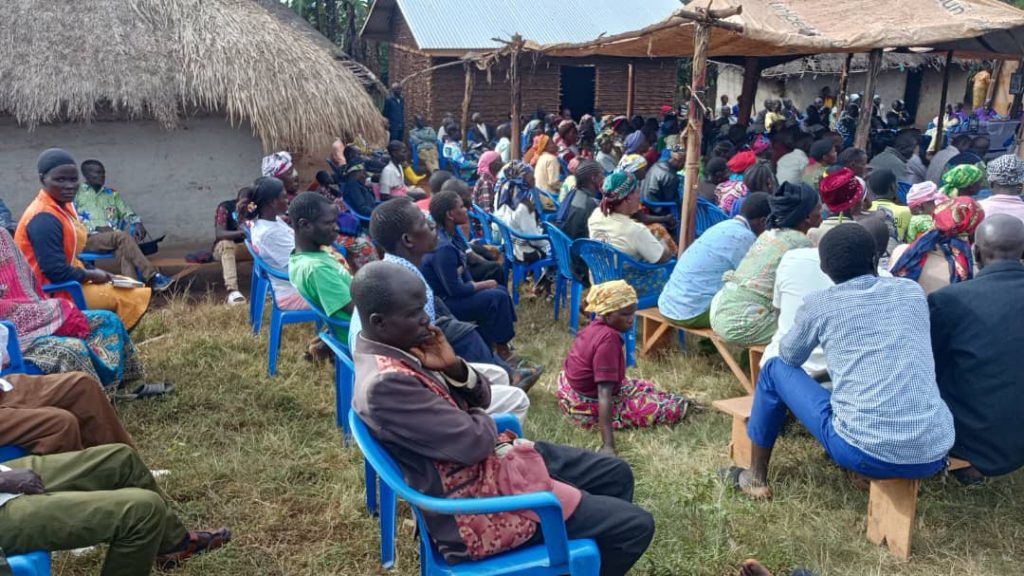
Community members in Ituri during a village meeting where we participated in order to share information about Ebola
In conclusion
We are still engaged and we shall continue doing all what we can, we have tried our best with contributions from our pockets and still our efforts will continue. We are so proud that our advocacy approach is progressing well but we also frustrated to observe that we want to do now things which we were supposed to do two months back when Ebola started. We call upon our partners to support us in what we are doing so that we may end this problem quickly and save lives.
Two recommendations
The first is that we should prioritize community driven responses by empowering community led initiatives to take the lead in the first against Ebola in Ituri, community human resource should be mobilized and involved, it is the same with involving armed groups in this community approach,
The second is to direct the funding to communities and then other actors can come up in to supporting what is being done but not to take the lead,
Long-term solutions
The DRC Government should be strongly supported in order to restore peace and security in Ituri so that people can leave Internally Displaced Persons Camps who are mainly affected, this will allow people to come up with other livelihood activities instead of depending on dead animals,
The DRC Government together with her partners should shift from relief aid to development activities in order to empower communities to be self-reliant through alternative livelihood activities in order to fight against poverty and improve their living conditions,
The DRC Government and her partners should consider a long-term activities in the fight against Ebola and these long-term activities should be well funded,
Thanks
Kulihoshi Musikami Pecos
National Team Leader


