
General information on abuses and violence against indigenous people in Equateur Province DRC
-
by
cojeski
- No Comments on General information on abuses and violence against indigenous people in Equateur Province DRC
Twa who are again called Pygmies are the very indigenous people in the Democratic Republic of Congo and as such they have been stigmatized and marginalized all along. We are now involved in various activities aiming at supporting them to claim for their rights and at the same time forge a way towards development. The original French Version is here ”
So the Democratic Republic of Congo passed a law which favors their protection and recognition but due to many factors this law is suffering set back.

INFORMATION BULLETIN ON VIOLENCE AGAINST WOMEN AND GIRLS OF THE INDIGENOUS PYGMY PEOPLES (PAP) IN THE TERRITORY OF INGENDE, CITY OF MBANDAKA IN THE DEMOCRATIC REPUBLIC OF CONGO
- CONTEXT AND JUSTIFICATION
The territory of Ingende is among the 7 territories that make up the Province of Equateur, in the DRC, is separated to the north with the city of Mbandaka, to the south with the Province of Maindombe to the east with the territory of Bolomba and to the west with the territory of Bikoro in all its borders the indigenous Pygmy peoples (PAP).
Over 55% of Ingende’s population are Indigenous Peoples (Pygmies), and their customs and traditions are an integral part of their practices. The main economic activities are fishing, agriculture, livestock farming, artisanal palm oil production, and large-scale industrial palm oil production by the company PHC BOTEKA. There is also a Chinese logging company, COKIBAFOD, and a logging company, Maniema Union (BBC). The territory lacks partners to support the increase in local agricultural production, the roads in the agricultural deserts are deteriorating, the whaleboats remain the only route for villages along the rivers and create night traffic accidents every year due to a lack of proper vehicles to safely evacuate goods because the population evacuates agricultural products by wooden whaleboats, of which this year more than 200 deaths were recorded due to shipwrecks.
The presence of telephone networks (Vodacom and Airtel) which cover nearly 26% of the territory, as well as the three community radio stations installed by FAO ( Ingende) Emala and others in BOTEKA 2 radios donated by the Honorable Freddy BOMPANZE ENGOMBE (Boteka-Mbila Radio Television) and donated by the Honorable Clarisse Boloko which cover 55% of the territory.
The Territory has 2 General Referral Hospitals (1 in the center of Ingende and 1 in Lotumbe), a Boteka Mbila Society Hospital, 3 Reference Health Centers and 36 Health Centers apart from the Society Hospital the rest do not have the medicines for good care, which leads to low attendance of the population at health facilities and increases the rate of maternal and infant mortality and morbidity.
There is weak involvement of political actors for the proper use of free medicines distributed by the NGO SANRU for the fight against Malaria across all 18 Health Zones of the Province of Equateur, of which Ingende has 2 zones, while the population is not informed about the free medicines because these medicines are often sold in the city center of Mbandaka before reaching the beneficiaries, and yet in the DRC there is a death due to malaria every 15 seconds.
Pygmy and Bantu women and girls working at the Plantation Huilerie du Congo/Boteka (PHC/Boteka) company face multiple forms of violence stemming from structural discrimination based on their ethnicity, gender, and socioeconomic status. They suffer economic violence, including the non-payment of childcare expenses, which should be included in their wages but are supposedly paid to the National Social Security Fund (CNSS) quarterly, but unfortunately not. Furthermore, the company fails to pay social security contributions to the CNSS, yet these funds are deducted directly from their monthly salaries, depriving them of essential rights such as retirement, health insurance, and maternity benefits. Pygmy women are also exposed to physical and sexual violence in an environment where ethnic stereotypes and prejudices exacerbate their vulnerability.
Pygmy girls are particularly affected by school exclusion, despite the presence of the law protecting Indigenous Pygmy Peoples, which stipulates free secondary education for PAP children. These girls receive no benefits, and 95% do not attend school (they are harassed by teachers), and 95% lack school supplies, perpetuating a cycle of poverty, early marriage, and exploitation.
The negative reactions towards them, marked by discriminatory attitudes, reinforce their social invisibility. Plantation workers face abusive working conditions without adequate social protection.
Other violations committed by traders, entrepreneurs, etc., as soon as they know that a Pygmy Indigenous People will be retiring in 6 or 12 months, they will start to loan them out by force. If they lend her $100, it’s to be repaid $300 in a month. Since this will be delayed beyond 6 months, the Pygmy woman will have a debt of $1800. And if, for a year, the trader increases the amount so that the Pygmy woman pays $3600, then when her final settlement is paid, she will not be left with anything; on the contrary, she will still be in debt to the trader. Because these Pygmy women can work even 40 years for the company, but her final settlement, if that’s a lot, would be $1500, then the trader will again take her retirement certificate and identity card to start collecting on her behalf from the National Social Security Fund (CNSS) and give her a loan of $20 to $30 every quarter. And this is the case for 92% of the pensioners of the PHC company.
Weak advocacy at the assembly level to defend the causes of Indigenous Pygmy Peoples (PAP), the endemic conflicts between the exploitation companies (PHC Boteka and COKIBAFOD) and local communities, the deputies say nothing, the government and security council are corrupt.
This is why it is necessary to find partners to structure local Pygmy and Bantu organizations, organize a series of mass and awareness-raising activities to remedy the situation in order to have a united, emerging, developed and inclusive Ingende.
- Overall needs
Combating all forms of violence against women and girls of Indigenous Pygmy (IPP) peoples, promoting their social inclusion and development
- Recommendations/potential solutions
To address these problems, the following series of activities should be carried out urgently:
- Organize a participatory evaluation targeting all segments of the population (Bantu, PAP, Employers, Teachers, Political and Administrative Authority, Traders, etc.) and propose local solutions/recommendations.
- Structuring/creating local organizations of the Pygmies and Bantu
- Organize local follow-up and evaluation meetings by bringing together different segments of the population;
- Organize meetings for the exchange of experiences between PAPA leaders and the civil society organizations that support them.
- Organize village-level forums for public expression to gather the problems of other communities who will not attend the various meetings.
- Organize provincial roundtables with all provincial authorities (Security Councils), civil society actors, provincial deputies, the Pygmy indigenous peoples’ movement, etc., to provide solutions to problems not resolved at the local level.
- Popularize the law protecting Indigenous Pygmy Peoples throughout the territory (to churches, schools, works, associations and all population groups) on the inclusion of Indigenous Pygmy Peoples;
- Organize webinars with partner participation;
- Organize capacity-building workshops for Pygmy and Bantu women and girls leaders
- Providing school kits to girls from indigenous Pygmy communities
- Organize advocacy efforts with political and administrative authorities, heads of secondary schools, employers, etc.
- Strengthening local organizations from the poorest Pygmy and Bantu households in agricultural techniques, entrepreneurship, etc.
- Equipping its trained organizations with inputs and materials for sustainable agriculture, and microcredit or start-up funds for young entrepreneurs (women, girls and men)
- Prepare various reports and summaries
Done in Mbandaka; on 25/11/2025
Ingende |
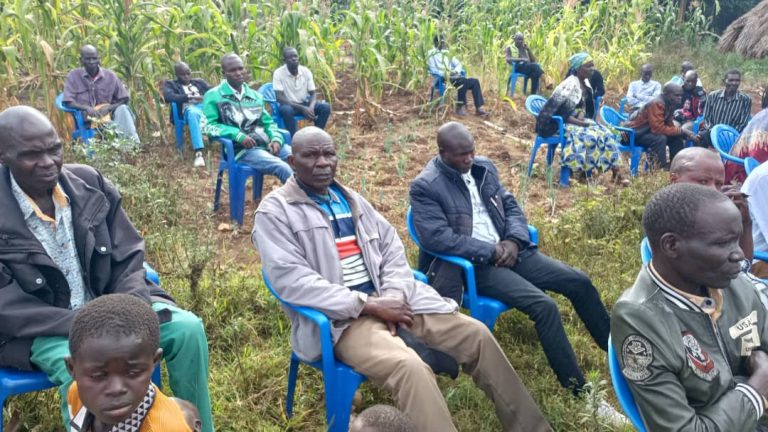
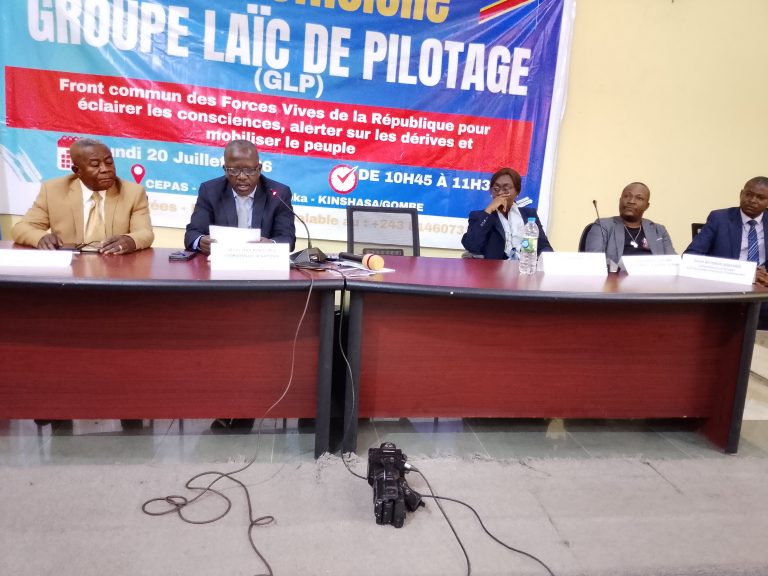
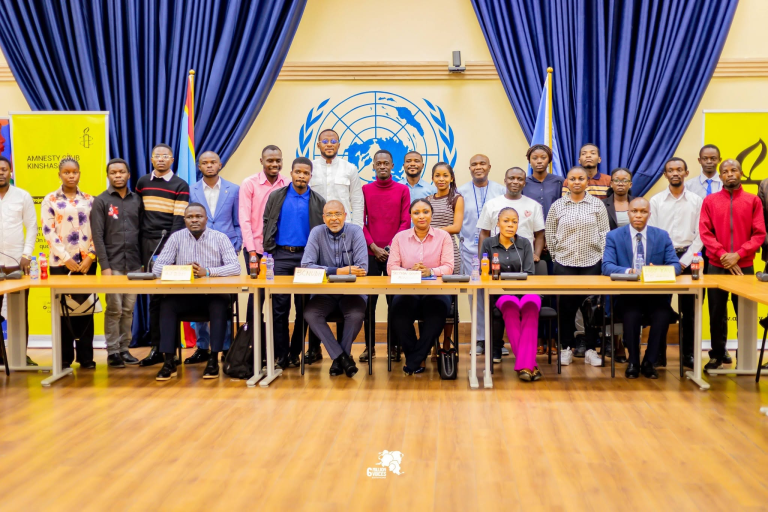
Some images and videos are attached.