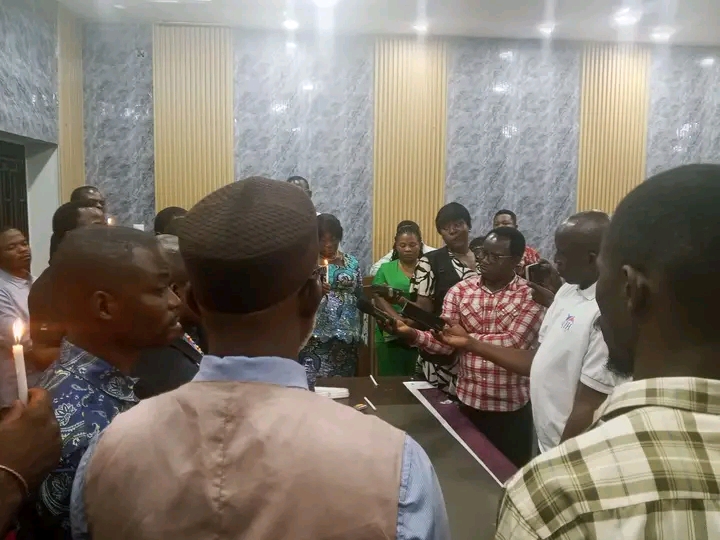
Presentation on the situation of refugees in DRC during the PILNet Global Refugee Forum in Cape-Town South November 2026
-
by
cojeski
- No Comments on Presentation on the situation of refugees in DRC during the PILNet Global Refugee Forum in Cape-Town South November 2026
INTERNATIONAL ADVOCACY BRIEFING ON THE SITUATION OF REFUGEES IN THE DEMOCRATIC REPUBLIC OF CONGO.
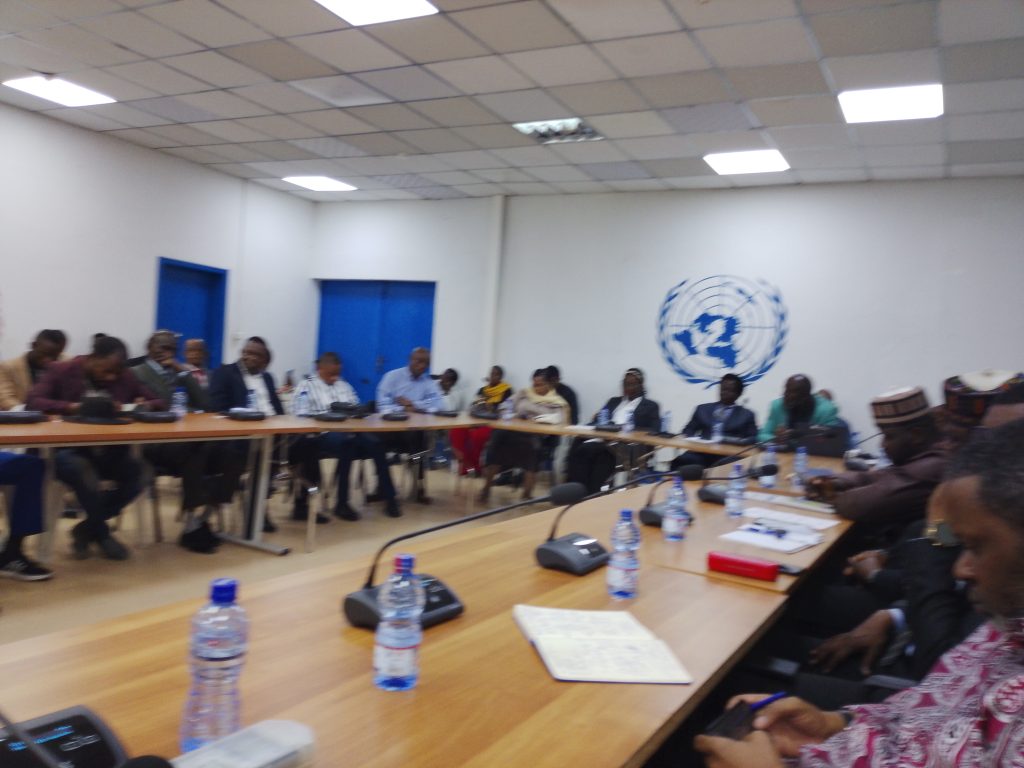
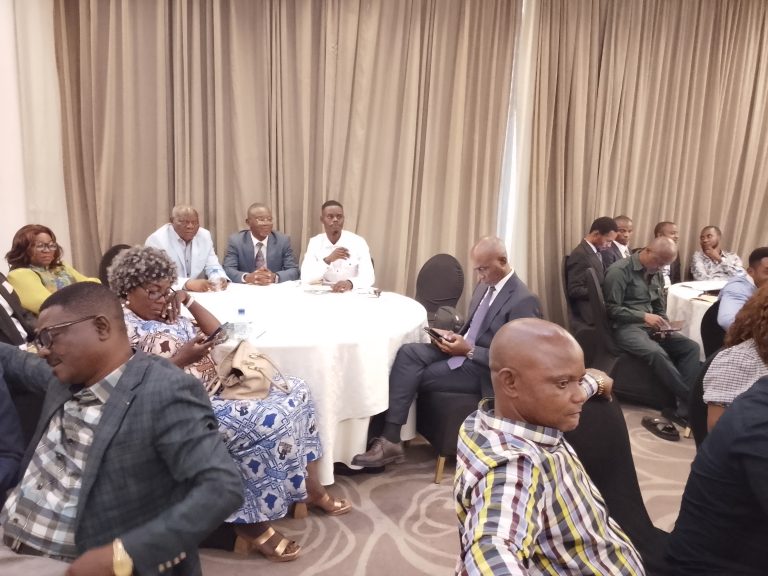
Photo of the public Dialogue we organized in Kinshasa on the World Refugee Day, June 2026 in the Conference room of the United Nations Mission in DRC MONUSCO.
FOR THE LEGAL PROTECTION, HUMAN SECURITY, AND SOCIOECONOMIC INTEGRATION OF REFUGEES LIVING IN THE DEMOCRATIC REPUBLIC OF CONGO
FOR THE ATTENTION OF THE WORLD SUMMIT ON THE LEGAL PROTECTION OF REFUGEES – SOUTH AFRICA
Lead Organization: COLLECTIVE OF YOUTH ORGANIZATIONS FOR SOLIDARITY IN CONGO-KINSHASA (COJESKI-DRC)
Assessment Period: 2021-2025
Subject: Assessment of Congolese public policies on refugee protection, identification of institutional gaps, and recommendations to the Government of the DRC and the international community.
PREAMBLE: THE DRC – A LAND OF HOSPITALITY, SOLIDARITY, AND INTERNATIONAL RESPONSIBILITY
For decades, the Democratic Republic of Congo has endured some of the most severe security, humanitarian, and economic crises in the world. Yet, despite its own immense suffering, the DRC continues to host hundreds of thousands of people forced to flee war, persecution, generalized violence, and grave human rights violations.
To welcome refugees while your own people are victims of armed conflict is an extraordinary act of human solidarity and international responsibility. But hospitality cannot replace public policy. It must be backed by effective legal protection, a functional administration, adapted security, and access to essential social services, and durable mechanisms for integration or voluntary return. COJESKI-DRC believes the time has come to place the situation of refugees hosted in the DRC at the center of the international debate.
This brief pursues a dual objective:
1. To acknowledge the DRC’s efforts in hosting and protecting refugees, while exposing the critical failures that undermine their fundamental rights, may raise serious questions about our real sense of hospitality and human dignity.
2. To mobilize international solidarity for a deep reform and sustainable financing of the national refugee management system through a very clear international financing mechanism based on shared responsibilities,
Our conviction is absolute: Refugee protection in DRC is not a political favor, cannot be debated and not negotiable. It is not a mere humanitarian operation, a human way of being in a country largely Christian and holding African Culture. It is an international legal obligation and a permanent responsibility of the State. However this should be echoed loudly and must be observed by all actors.
I. WHAT THE DRC HAS ACHIEVED FOR REFUGEES: 2021-2025
We must recognize several institutional, legal, and operational achievements.
1. A National Legal Framework for Protection Has Been Maintained,
The DRC retains a legal architecture based on:
– The 1951 Geneva Convention Relating to the Status of Refugees.
– The 1967 New York Protocol.
– The 1969 OAU Convention Governing the Specific Aspects of Refugee Problems in Africa.
– The DRC Constitution of 18 February 2006, notably Article 33.
– Law No. 021/2002 of 16 October 2002 on the Status of Refugees in the DRC.
This framework guarantees the right to seek asylum, protection against refoulement, and access to Refugee Status Determination (RSD).
2. The National Commission for Refugees (CNR) Has Been Maintained,
The CNR, established by Congolese law, remains the essential public body for RSD and for coordinating legal and administrative protection. Its continued existence is a major institutional gain.
3. Refugee Status Determination Procedures have continued
With the support of UNHCR, the DRC has continued eligibility sessions and efforts to improve registration and status recognition. UNHCR reports show progress in asylum access and protection mechanisms between 2022 and 2026 which passed from 526,000 to 623,000 in 2026. Among the 623,000 refugees who are recognized now about 250,000 only have valid documents and are contact with UNHCR and CNR, and about 100,000 refugees have access to certain forms of relief aid from UNHCR. We estimate that DRC hosts more than 3 million refugees who came over the years and who settled in various host communities, and who are not recorded.
4. Cooperation with International Organizations has been sustained despite the challenges because many organizations are not focused on issues around the protection of refugees in DRC,
The Congolese Government has maintained cooperation with UNHCR and humanitarian actors. This has supported interventions in legal aid, healthcare access, education, humanitarian assistance, and community protection.
5. Access to Healthcare and Essential Services Has Been Preserved
UNHCR performance data for 2025 reports a 97% access rate to health services for refugees and asylum seekers, generally from those who are targeted by UNHCR while those who do not meet UNHCR criteria are not supported. This is an encouraging result that must be consolidated and extended to all refugees and asylum seekers in host territories, especially where UNHCR and CNR are absent,
6. Freedom of movement Has Been preserved
UNHCR 2025 data also confirms the preservation of freedom of movement for refugees and asylum seekers – a fundamental right essential to their dignity, autonomy, and socioeconomic participation. However this is subjected to movement in urban areas in the same province and territories. Generally refugees’ movement to different provinces is highly limited and refugees have been restricted to move outside DRC.
7. Legal assistance and documentation efforts
In 2024, UNHCR reported legal assistance provided to 1,270 refugees and asylum seekers in the DRC, improving access to documentation, legal representation, and protection against discrimination and arbitrary detention. Generally those who benefited were either had expired documents or have been waiting for long to be granted the documents. This did not cover new ones who are still waiting.
Assessment: These achievements prove that the DRC has the legal and institutional foundations upon which a genuine and effective national refugee protection policy can be built.
II. THE FAILURES: WHERE THE SYSTEM IS BREAKING DOWN (2021-2025)
Acknowledging progress must not prevent an objective examination of the failures that deny effective protection to both refugees and asylum seekers in the Democratic Republic of Congo.
Institutional incapacity to address refugee issues
The United Nations High Commissioner for Refugees (UNHCR) has been the leading in issues around refugees, however refugees believe UNHCR is highly political and acts on the interests of governments and often sacrifices her refugee protection mission. In our interactions this year 2026 with refugees from Angola and the Republic of Congo, they narrated various incidents in which UNHCR was directly involved in their rights violations and other incidents in which UNHCR supported governments to violate refugee rights especially deportation, killing and forced repatriation including the denial of basic services.
During the period 2021 to 2021 Rwandan refugees in North Kivu still have fresh memories of incidents in which UNHCR was used by Rwanda in order to capture them, kill them and poison them. To make the matter worse the last year 2025 images and photos of UNHCR officers facilitating the forced repatriation of Rwandan refugees back to Rwanda, took away the very last hope refugees had in UNHCR in DRC. While a big percentage of Rwandan refugees in DRC are Hutu, UNHCR is composed of Tutsi with the power to decide and generally UNHCR officers in Goma and Bukavu stay in Rwanda, this affects so much their independency and impartiality. In Kalemie, the UNHCR Protection Officer is a Tutsi and this has been a serious issue among Hutu refugees. On top of that UNHCR in DRC has officers in place who are well perceived as being employed in order to make refugee suffer and to take decisions against refugees, these officers have been their posts over the years for more than 20 years, they know how to manipulate the system and compromise government institutions. The fact that UNHCR has implemented a pro-Rwandan Policy which is focused of criminalizing and denying protection to Rwandan refugees, this placed the institution in a very negative position.
UNHCR in the Democratic Republic of Congo needs to fundamentally make reforms starting by changing all her staffs who are either viewed as Rwandan or associated to Rwanda, change her approach by focusing more the attention of effective refugee protection in DRC, and by leading humanitarian efforts to support refugees in DRC,
The National Commission for Refugees (CNR)
CNR is the government body established in 2002 and fully managed by officers who are perceived as former warlords backed by Rwanda and doing the work to help Rwanda. Some of CNR officers are accused by refugees of committing serious crimes against refugees and failure to guide the country how best to approach issues about refugees.
CNR being so much dependent of UNHCR needs to go through the same reforms by putting in place new and impartial office-bearers, a very nice national plan which protects refugees and mobilizing the necessary resources to respond to their needs.
1. Failure in Refugee Status Determination (RSD)
Chronic administrative delays leave many asylum seekers in prolonged legal limbo, blocking access to documentation, employment, social services, and legal security. Some asylum seekers have spent 10 years waiting for a decision to be made about their application, those who were rejected have been waiting for more than 20 years for their appeal application to be reviewed, and thousands of asylum seekers have stayed in DRC without being registered. In Uvira City South Kivu Province, more than 12,000 asylum seekers visited our offices in 2024 and 2025 wanting to have a refugee status. And regardless our efforts to engage both UNHCR and CNR to put in place opportunities to listen to the claims of these asylum, nothing has been done up to now. Most of those who are yearning for the refugee status include: Refugees from Burundi who came in 1976, refugees from Burundi who came between 1990-1993 and many others who came after that period. But also refugees from Rwanda who came in 1994 and those who came after until today.
Our activities in Kalemie City, Tanganyika province indicated in 2025 and 2025 the presence on big number of Rwandan refugees who are not registered living in host communities, at the same the presence of Burundian Asylum seekers who were repatriated by force to Burundi, but they were persecuted in Burundi and then came back to Kalemie where UNHCR and CNR refused to review their asylum claims until now. Our field visit in Lubumbashi City, Haut-Katanga Province in 2025 observed the presence of Somalis asylum seekers who were denied registration by UNHCR/CNR on ground that they were business people and economic migrants, which they highly contested and claimed to be asylum seekers in search of protection. In Kinshasa our offices recorded asylum seekers from Rwanda and the Republic of Congo who have never been registered, 10 asylum seekers waiting for the refugee status and others who have no information about UNHCR and CNR services to refugees.
2. Breakdown of the Appeals Mechanism
The Appeals Commission provided for by law has suffered a long period of inactivity, documented in international reports. This is a critical protection gap. A rejected asylum seeker must have an effective right to appeal. A rejection must never mean the end of due process. In 2026 our offices recorded 13 asylum seekers who have been waiting for the decision of the appeal board for more than 15 years. The appeal of more than 3,000 households Angola Refugees who were subjected to the refugee status secession clause in 2012 by the Minister of Internal Affairs has never been reviewed up to now and all of these families are living in difficult situation.
To make the matter worse, all Rwandan refugees and asylum seekers and their descendants who came in 1994 and after were deliberately excluded from the grant of refugee status and their efforts to make appeals have never been considered up to now.
3. Failure in Registration and Documentation
Lack of secure ID exposes refugees to abusive checks, administrative restrictions, discrimination, and exploitation. Modernization of biometric registration and systematic issuance of secure documents is urgent. Both UNHCR and CNR are not accessible in the whole country, and in many places asylum seekers have never seen these two institutions and no one else knows about them. Local authorities remain highly ignorant on what they can do in order to guide and orient refugees and asylum seekers. This makes many stay in their communities without a clear identification which limits their ability to function and to survive.
4. Lack of Access to Basic Social Services
Despite progress, refugees in rural and remote areas still struggle to access schools and universities, specialized healthcare, clean water and sanitation, decent housing, income-generating activities, vocational training, and justice, especially those who live in host communities where these basic services do not also exist. Those in cities where UNHCR/CNR are operational are also concerned about the categorization and the selection of those who are eligible to access services and those who are excluded. Some children are paid for school fees while others not, some refugees are treated in health centers which are in partnership with UNHCR while others are not, some refugees are given financial capital to start Income Generating Activities others are not given. In Goma UNHCR/CNR put in place a system which is called Mutuel de Sante (Health Mutuality) in which UNHCR contributed 750% and the refugee contributed 25% of the total which was viewed as a way of getting money from refugees which can be called fraud.
Theoretical access is not effective access.
5. Critical Shortage of Financial and Logistical Resources
Refugee management remains heavily dependent on international aid. When humanitarian funding drops, services collapse. National and provincial institutions lack the budget, technical capacity, and human resources. The lacks of funds is visible currently in all refugee affairs in the Democratic Republic of Congo especially when we observe UNHCR and those who benefited from her services, however this has not yet impacted thousands of refugees who have lived in the same situation over the years even when money was available. The major point is the management of the available resources for the benefit of the entire community, this is the reason why we may not clearly observe the negative impact of the current funding cut in the lives of refugees.
6. Exposure to Armed Conflict and Insecurity
In Eastern DRC, refugees, asylum seekers, and host communities face secondary displacement, violence, threats, humanitarian access constraints, and destroyed infrastructure. A big number in thousands of Rwandan refugees in the Democratic Republic of Congo alongside the host communities especially in North Kivu and South Kivu have been displaced each five years since 1996 up today due to Rwanda Military intervention in DRC. The different massacres of Rwandan refugees in DRC remain the most unknown, less documented, not commemorated and not preserved until today, with the risk to disappear. In the City of Goma, mainly in Mugunga and Lake Vert most of the sites of Massacres were taken and used to build houses for residential purpose of the host communities. With this, we are losing these sites and should not be able to trace all those who were killed. From the period of 2019 to 2022 we recorded seven (7) Rwandan refugees shot in Goma by security operatives connected to Rwanda, 11 Rwandan refugees deported secretly back to Rwanda including the vocal Refugee Human Rights Defender Angelo Habomuremye and Pastor David Habimana. In 2025 more than 1,350 Rwandan refugees were deported from Goma to Rwanda by M23 rebels backed by Rwanda.
Refugee forced repatriation
Our offices in Goma documented cases of forced repatriation of Rwandan Refugees in Goma back to Rwanda, these operations were carried out by UNHCR together with the DRC Government and they were regular. This year 2026 alone the coalition DRC Government, UNHCR AFC/M23 and Rwanda managed to force more than 4,000 to go back to Rwanda against their own will. Many other refugees who sought shelter and protection in areas which are under the control of FDLR were captured by MONUSCO and sent to Rwanda in the name of FDLR dependents or relatives.
Failure to ensure the protection of Rwandan refugees
Generally all Rwandan refugees in DRC are perceived either associated to FDLR or played a role in the genocide in Rwanda, these wrong perceptions have existed over the years and have never been put to test up to now. We have challenged the approach of criminalizing Rwandan refugees in DRC since 2021 up to now, and the lack of efforts to look into their protection needs. Most of Rwandan refugees in both South Kivu and North Kivu are perceived as a danger to Rwanda, yet other Rwandan refugees in other provinces are not considered in that way. Our work since 2021 to 2025 observed that Rwandan refugees in both Kivu were better protected in areas that are under the control of FDLR than in areas which were under the control of DRC Government, this pushed many refugees to relocate to areas controlled by FDLR.
Using refugees as spies
During our work in Goma from 2021 to 2025 we observed that fake asylum seekers were sent by Rwanda to Goma North Kivu to claim refugee status in order to spy on all those who were in North Kivu. These spies benefited from a well-organized chain of actors to facilitate their activities and obtain the refugee status but also being supported with relief aid, being deployed in the field for various opportunities and being placed in the refugee leadership in Goma. A refugee leader member of the Urban Refugee Welfare Council in Goma known as Akaje was the first to be detected in September 2023 when he mobilized some Rwandan refugees in Bojovu and Nyiragongo claiming to help them to get the refugee status but handed them over to Rwanda Army and they were taken to Rwanda. Another refugee known as Ndekezi Toms was intentionally placed as one of the Refugee Community Volunteers in Goma to identify the needs of fellow refugees and report to UNHCR, currently Tom’s is one among M23 Commanders in Goma working with Intelligence Services and helping them to track refugees. More other refugee leaders who were diploid to Goma easily joined and are now part of M23 group, while others left Goma in 2024 to join M23 in Bunagana.
7. Failure to Prevent Sexual and Gender-Based Violence
Women, girls, and refugee children are acutely exposed to sexual violence, exploitation, human trafficking, forced marriage, and abuse. Prevention, reporting, medical, psychosocial, and judicial response systems must be urgently strengthened. During our work in Goma at least 8 out 10 refugee women and young girls had one or two children they produced with Congolese men in order to access shelter, protection in terms of getting where to hide, to get food and to have where they can grow crops. Sexual and gender based violence affecting refugee women in DRC is not recorded and statistics about this remain not available.
8. Lack of Economic Empowerment
Prolonged dependency on aid is not a durable solution. Legal access to work, vocational training, entrepreneurship, agriculture, credit, and economic activity must become central to national protection policy. Up to now a refugee cannot buy a SimCard for the Telephone on his/her name, in all public places refugee identification cards are not mentioned as part of documents a person should present in order to access services.
9. Lack of Transparency and Accountability
Data on exact refugee numbers, locations, living conditions, funds mobilized, and intervention results must be published regularly. Refugees themselves must be able to report rights violations without fear of reprisal. This year 2026 UNHCR has not yet made a single public statement about the situation of refugees in DRC, not even a single press conference, CNR also has not said anything. The Minister of Social Affaires only recently mentioned the word “refugee once” in September during a meeting with UNHCR but again she was not clear which kind of refugees she was talking about because for Congolese people refugees are all those Internally Displaced Persons running away from war. For the last two no even a single Diplomatic Mission has made a statement on the situation of refugees in DRC, the last time the European Union posted something on their Facebook Page about refugees in DRC was in 2023 during the World Refugee Day.
Discrimination affecting refugees in DRC
Human Rights Actors, Development Partners, Donors, Civil Society Organizations highly discriminate refugees in DRC, for the last five years no one has produced even one page report on the situation of refugees in DRC. The only existing and trusted focusing on refugees in the United Nations Mapping Report.
Assessment: The DRC’s problem is not the absence of a legal framework. It is the massive gap between legal commitments and actual implementation. The challenge now is institutional effectiveness, transparency, resources, and public accountability.
III. OUR 12 CONCRETE RECOMMEDNATIONS TO THE INTERNATIONAL COMMUNITY AND ALL ACTORS
COJESKI-DRC calls for the adoption of an International Support Program for the Sustainable Protection and Management of Refugees in the DRC in order to replace the only existing repatriation approach, and actually which should put an end to the repatriation policy,
RECOMMENDATION 1: CONDUCT A COMPREHENSIVE NATIONAL REFUGEE CENSUS
We call on the Government, with UNHCR, the civil Society and independent bodies, to conduct an updated national census to establish: exact numbers and nationalities, geographic locations, family status, administrative and legal situation, specific protection needs, access to social services, and prospects for integration or voluntary return. Data collection must respect confidentiality, data protection, and non-discrimination.
RECOMMENDATION 2: REACTIVATE AND STRENGTHEN THE APPEALS COMMISSION
We demand the effective operationalization of the Appeals Commission, in accordance with Congolese law: regular functioning, functional independence and impartiality, training in international refugee law, legal and linguistic assistance, decentralization where possible, and reasonable processing timelines. No asylum seeker should remain in legal limbo indefinitely.
RECOMMENDATION 3: ISSUE SECURE IDENTITY AND RESIDENCE DOCUMENTS
Every recognized refugee and registered asylum seeker must receive documents appropriate to their legal status, facilitating access to public services, healthcare, education, authorized banking, legal employment, justice, and freedom of movement, among other services without discrimination,
RECOMMENDATION 4: ADOPT A NATIONAL SOCIOECONOMIC INTEGRATION PROGRAM
We call for a national empowerment program for refugees and support for host communities, promoting vocational training, agriculture and livestock, economic cooperatives, SMEs, market access, income-generating activities, women and youth entrepreneurship, and financial inclusion. The goal: transform refugees from permanent aid beneficiaries into development actors,
RECOMMENDATION 5: GUARANTEE EDUCATION FOR REFUGEE CHILDREN REFUGEE ADULTS
Establish an inclusive schooling mechanism for primary, secondary, and where possible, tertiary education. Prior learning and diplomas must be recognized through adapted mechanisms. No child should be denied education because of nationality or refugee status. Putting in mind that thousands of refugees have never accessed education to wars and other factors, Adult Education Programme should inclusive of the humanitarian relief aid to refugees and other development programs.
RECOMMENDATION 6: STRENGTHEN PROTECTION FOR WOMEN AND CHILDREN
Create specialized mechanisms to: prevent SGBV, combat trafficking, identify unaccompanied and separated children, prevent child recruitment and exploitation, provide medical and psychosocial care for victims, and ensure access to justice and witness protection. This can be possible through the legalization and recognizing of the existing refugee settings across the whole country and establishing new refugee settlements far from the borders of their countries of origin,
RECOMMENDATION 7: CREATE AN INDEPENDENT NATIONAL MONITORING MECHANISM
Establish a permanent monitoring and evaluation body comprising the CNR, the National Human Rights Commission, UNHCR, Civil society, Refugee Associations, Provincial Authorities, and host community representatives. It must publish an annual report on the state of refugee protection in the DRC. This body should be funded directly by the Donors and be headed by the Civil Society organizations involved in refugee issues,
RECOMMENDATION 8: GUARANTEE SECURITY OF SITES AND HOST COMMUNITIES
We call on the Government and partners mainly MONUSCO to strengthen security around refugee hosting sites, in full respect for human rights, the civilian and humanitarian character of sites, and the principle of distinction between civilians and armed actors. Prevent infiltration by armed groups, military use of camps, and political instrumentalization. Refugees must never be collectively treated as a national security threat.
RECOMMENDATION 9: STRENGTHEN CROSS-BORDER COOPERATION AND NATIONALITY VERIFICATION
Promote technical cooperation between DRC, UNHCR, and concerned states to verify registration data, prevent double registration and document fraud, identify persons with specific protection needs, combat cross-border trafficking, facilitate family reunification, and organize voluntary returns when safe. This must respect confidentiality and never expose a refugee to persecution. In the same way, refugees should be settled far from the borders of their countries of origin, at least 150 Km.
RECOMMENDATION 10: ORGANIZE VOLUNTARY, SAFE, AND DIGNIFIED REPATRIATION ALONGSIDE WITH OTHER DURABLE SOLUTIONS
Return is one among the durable solution only when freely chosen and when conditions of safety, dignity, and sustainability are met which is not yet the case. We call on UNHCR and concerned states to support voluntary repatriation mechanisms and other durable solutions such as resettlement and local integration. No refugee must be forced to return where life, liberty, or physical integrity is threatened. The principle of non-refoulement must be strictly upheld. At this time all repatriations should be put in hold, accessed and evaluated by all actors in order to draw a lesson and pave a way forward,
RECOMMENDATION 11: CREATE A DEDICATED INTERNATIONAL FUND FOR REFUGEES IN THE DRC
We propose an International Fund for Refugee Protection and Integration in the DRC, financed by voluntary state contributions, international financial institutions, the EU, AU, UN agencies, development banks, bilateral and multilateral partners, and private foundations with transparency safeguards. Funds must prioritize registration, documentation, education, health, housing, economic empowerment, and legal protection. Mandatory independent audit and regular publication of expenditures. This funds should be easily accessible to Civil Society organizations and all refugee initiatives without discrimination,
RECOMMENDATION 12: ESTABLISH A DIRECT PARTNERSHIP WITH CIVIL SOCIETY
Putting in mind that refugee protection is enjoyed in the communities under the Civil Society, National human rights organizations and refugee associations must be recognized as full partners in protection policy. COJESKI-DRC recommends: a permanent consultation framework, refugee consultation mechanisms, legal training programs, transparent funding for local initiatives, and civil society participation in national and international evaluations. Effective protection is impossible without those who live the daily reality of refugees.
IV. REFUGEES, NATIONAL SECURITY, AND REGIONAL STABILITY: ENDING POLITICAL INSTRUMENTALIZATION
The situation of refugees in the DRC should be addressed in the context of the Great Lakes security crisis. Poor management of refugee issues, inadequate documentation, lack of credible verification, and weak regional cooperation fuel diplomatic tensions and mutual accusations between states.
Our position is non-negotiable:
No State may instrumentalize the presence of refugees in a neighboring country to justify military intervention, aggression, territorial occupation, or any violation of sovereignty. The presence of refugees alone can never be a legal justification for the use of force.
At the same time, the DRC must take all legal measures to prevent its territory, including refugee hosting sites, from being used by armed groups for military purposes.
We must rigorously distinguish between:
– Civilian refugees in need of international protection.
– Asylum seekers whose status must be examined individually.
– Persons potentially involved in serious crimes, who require individual judicial procedures.
– Members of armed groups and military actors, who can never be automatically equated with refugee status.
This distinction is fundamental for the security of the DRC, the protection of refugees, and regional stability.
V. OUR FORMAL RECOMMENDATIONS TO THE WORLD SUMMIT AND THE INTERNATIONAL COMMUNITY
COJESKI-DRC calls on Summit participants to support:
1. An international declaration recognizing the urgent need to strengthen legal protection for refugees in the DRC,
2. A five-year national plan for refugee protection and integration by the Congolese Government,
3. Predictable, multi-year, and transparent international financing for the DRC,
4. Capacity-building for the CNR and effective reactivation of appeals mechanisms,
5. Support for biometric documentation and legal security.
6. Protection for women, children, and highly vulnerable persons.
7. Effective participation of refugees in decisions about their future.
8. An international mechanism to monitor commitments by the DRC and its partners.
9. Support for Congolese host communities so that solidarity does not become an unbearable burden.
10. Durable solutions based on voluntary repatriation, local integration, or, where appropriate, third-country resettlement.
VI. COMMITMENTS EXPECTED FROM THE CONGOLESE GOVERNMENT
COJESKI-DRC calls on the Government to make measurable commitments:
– Publish annual national statistics on refugees and asylum seekers.
– Establish an identifiable national budget for refugee protection.
– Strengthen administrative and operational capacity of the CNR.
– Guarantee free asylum procedures.
– Ensure effective enforcement of national legislation.
– Prosecute perpetrators of refugee rights violations.
– Facilitate the work of humanitarian organizations and human rights defenders.
– Institute permanent dialogue with refugee and host communities.
These commitments must be accompanied by performance indicators, clear deadlines, and an accountability mechanism.
VII. GENERAL CONCLUSION: PROTECTING REFUGEES IS PROTECTING PEACE
The DRC must no longer be seen only as a land of humanitarian crisis. It must be recognized as a host state that deserves international solidarity proportionate to the responsibilities it bears.
We refuse to let refugees be forgotten, marginalized, instrumentalized, or abandoned.
We also refuse to let Congolese host communities alone bear the economic, social, and humanitarian weight of a responsibility that belongs to international solidarity.
We call on the Congolese Government to move from essentially administrative and humanitarian management to a genuine national policy of legal protection, human security, economic empowerment, and peaceful coexistence.
We call on the UN, UNHCR, the African Union, the European Union, partner states, and international financial institutions to turn commitments into concrete actions and verifiable funding.
The DRC has a duty to protect refugees. The international community has a duty to support the DRC. Countries of origin have a duty to create conditions for voluntary, safe, and dignified return.
Finally, we forcefully affirm:
A REFUGEE IS NOT AN ENEMY. A REFUGEE IS NOT A DIPLOMATIC WEAPON. A REFUGEE IS NOT AN INSTRUMENT OF WAR.
A refugee is first and foremost a human being whose dignity, life, and rights must be protected.
Protecting refugees is a legal obligation, a civilizational imperative, and a strategic investment for peace and stability in the Great Lakes region.
PROTECT REFUGEES, STRENGTHEN THE DRC, AND PRESERVE PEACE IN THE GREAT LAKES.
FOR COJESKI-DRC
COLLECTIVE OF YOUTH ORGANIZATIONS FOR SOLIDARITY IN CONGO-KINSHASA
Advocacy document for the World Summit on the Legal Protection of Refugees – South Africa.
Kinshasa, Democratic Republic of Congo – November 2026.
Background information
The Collective of Youth Organizations for Solidarity known as COJESKI-DRC became visible in October 1995 in a hostile environment. Two factors pushed us to initiate COJESKI:
The first was the influx of thousands of refugees from both Rwanda and Burundi which caused a severe humanitarian crisis in both South Kivu and North Kivu which claims the lives of many both refugees and the host communities. Our approach at this time was to contribute to advocate for lasting solutions.
The second was the wave for the democratization of the country which was under the dictatorship of Mobutu. This also remained our commitment up to now as it also involved the promotion of human rights, peace and Good Governance.
COJESKI-DRC is a youth led network bringing together various youth initiatives in the Democratic Republic of Congo, it is among the very first initiatives of the Civil Society organizations which were created during that period. COJESKI-DRC is the only bringing together various Refugee Led Initiatives in DRC in order to expand for them a space and offer them better opportunities in order to survive.
At a certain point, we lost direction on issues concerning refugees but we bounced back again in 2021 up to now, striving for better options which can solves problems affecting refugees in DRC. COJESKI-DRC is present in all the 26 Provinces of the Democratic Republic of Congo.
Thanks
Kulihoshi Musikami Pecos
National Team Leader